
 Pin It
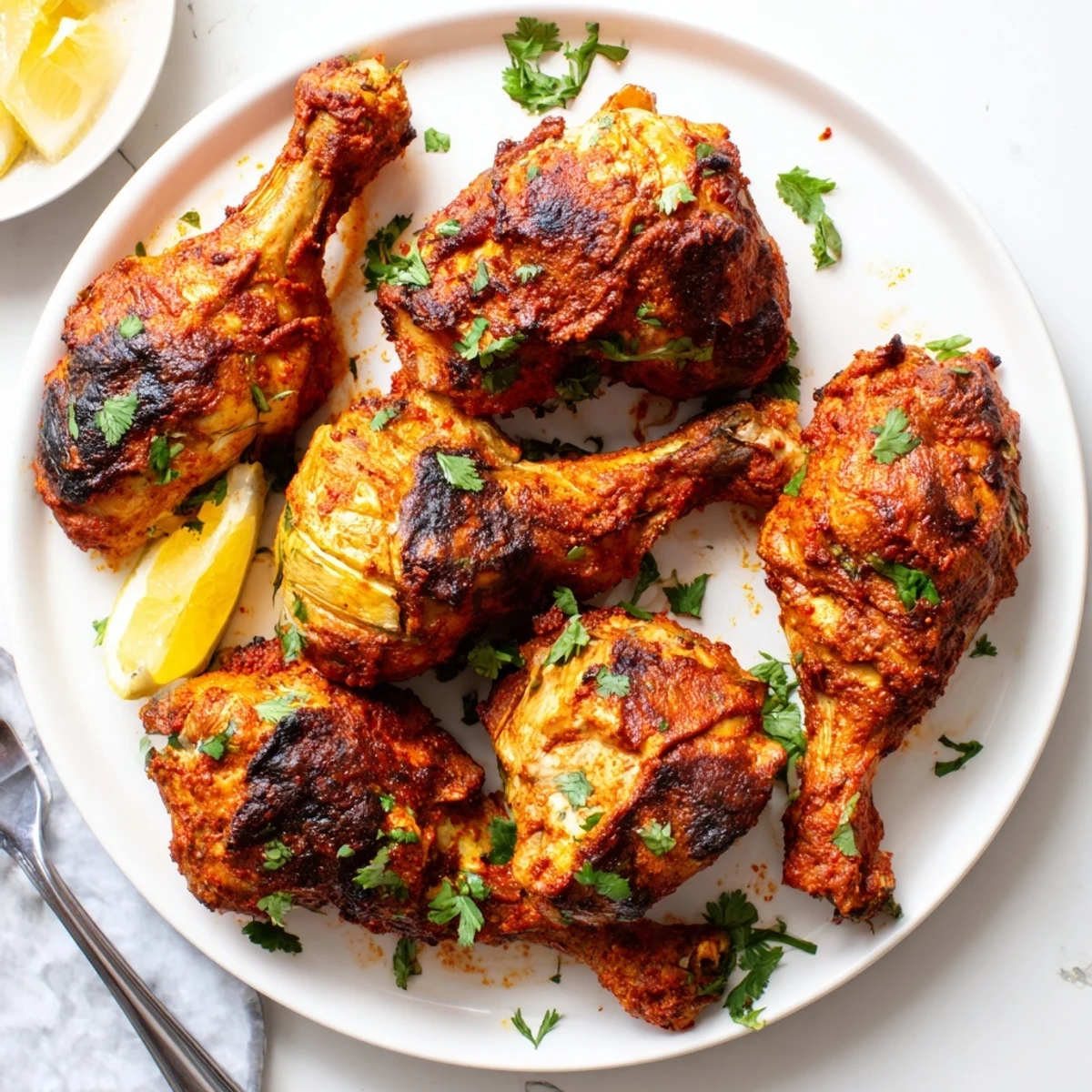
 Marinate skinless chicken legs and thighs in a yogurt blend brightened with lemon, ginger, garlic and tandoori masala. Make shallow slits to aid penetration and chill 4–24 hours for deep flavor. Roast at 220°C (425°F) on a wire rack or sear over hot coals until slightly charred and cooked through, about 30–35 minutes, basting once. Rest briefly, garnish with cilantro and lemon; serve with rice, naan or cooling raita.
My apartment smelled like a Delhi street stall for two days straight, and honestly, I was not mad about it. That first attempt at tandoori chicken happened during a brutal January when grilling outdoors was laughable, so I cranked my oven to its absolute limit and hoped for the best. The smoke alarm sang its opinion twice, but the chicken emerged with that impossible red crust and juiciness that made me forget all about the chaos.
My neighbor knocked on my door that evening, not to complain about the smoke, but to ask what on earth I was cooking because it smelled like a restaurant. We ended up sharing the batch with warm naan and a simple cucumber raita, and now she requests it every time the weather turns cold.
Ingredients
- Chicken legs and thighs (1.5 lbs, skinless): Dark meat stays far juicier than breast under high heat, and bone in pieces hold their shape beautifully during the long roast.
- Plain yogurt (1 cup): Whole milk yogurt creates the richest marinade, and its acidity is what tenderizes the chicken so effectively.
- Lemon juice (2 tbsp): Brightens the whole marinade and helps the spices bloom, so always use fresh squeezed if you can.
- Tandoori masala or mild curry powder (2 tbsp): This is your flavor backbone, so source a quality blend from an Indian grocery if possible.
- Ginger paste (1 tbsp): Adds warmth and a slight kick that you cannot replicate with dried ginger.
- Garlic paste (1 tbsp): Fresh garlic paste melds into the marinade and creates that savory depth underneath all the spices.
- Ground cumin (1 tsp): Brings an earthy, toasty note that rounds out the brighter spices.
- Ground coriander (1 tsp): Adds a subtle citrusy warmth that most people cannot quite identify but definitely miss when it is absent.
- Paprika (1 tsp): Gives the chicken its signature red hue without overwhelming heat.
- Ground turmeric (1/2 tsp): A little goes a long way, contributing color and a gentle bitterness that balances the richness.
- Chili powder (1/2 tsp, adjust to taste): This is your heat dial, so start conservative and build up in future batches.
- Salt (1 1/2 tsp): Proper salting is what separates bland chicken from something truly memorable.
- Vegetable oil (2 tbsp): Helps the spices adhere and promotes that gorgeous charring in the oven.
- Fresh cilantro and lemon wedges for garnish: A bright finish that cuts through the smoky richness beautifully.
Instructions
- Score the chicken:
- Take a sharp knife and cut shallow slashes across each piece of chicken, about a half inch deep, so the marinade can really seep into the meat rather than just coating the surface.
- Build the marinade:
- In a large bowl, stir together the yogurt, lemon juice, tandoori masala, ginger paste, garlic paste, cumin, coriander, paprika, turmeric, chili powder, salt, and oil until you have a vividly colored, smooth paste.
- Coat and rest:
- Drop the scored chicken into the marinade and turn each piece with your hands, massaging the mixture into every slit and crevice, then cover and refrigerate for at least 4 hours or ideally overnight for the deepest flavor.
- Preheat aggressively:
- Set your oven to 220 degrees Celsius (425 degrees Fahrenheit) and let it get fully hot, because that initial blast of heat is what creates the charred edges and seals in the juices.
- Roast and baste:
- Arrange the chicken on a wire rack set over a baking sheet and roast for 30 to 35 minutes, turning once halfway through and basting with any remaining marinade, until the edges are beautifully darkened and the internal temperature reaches 165 degrees Fahrenheit.
- Rest and serve:
- Let the chicken rest for five minutes so the juices redistribute, then scatter fresh cilantro over the top and squeeze a lemon wedge over each piece right before eating.
 Pin It
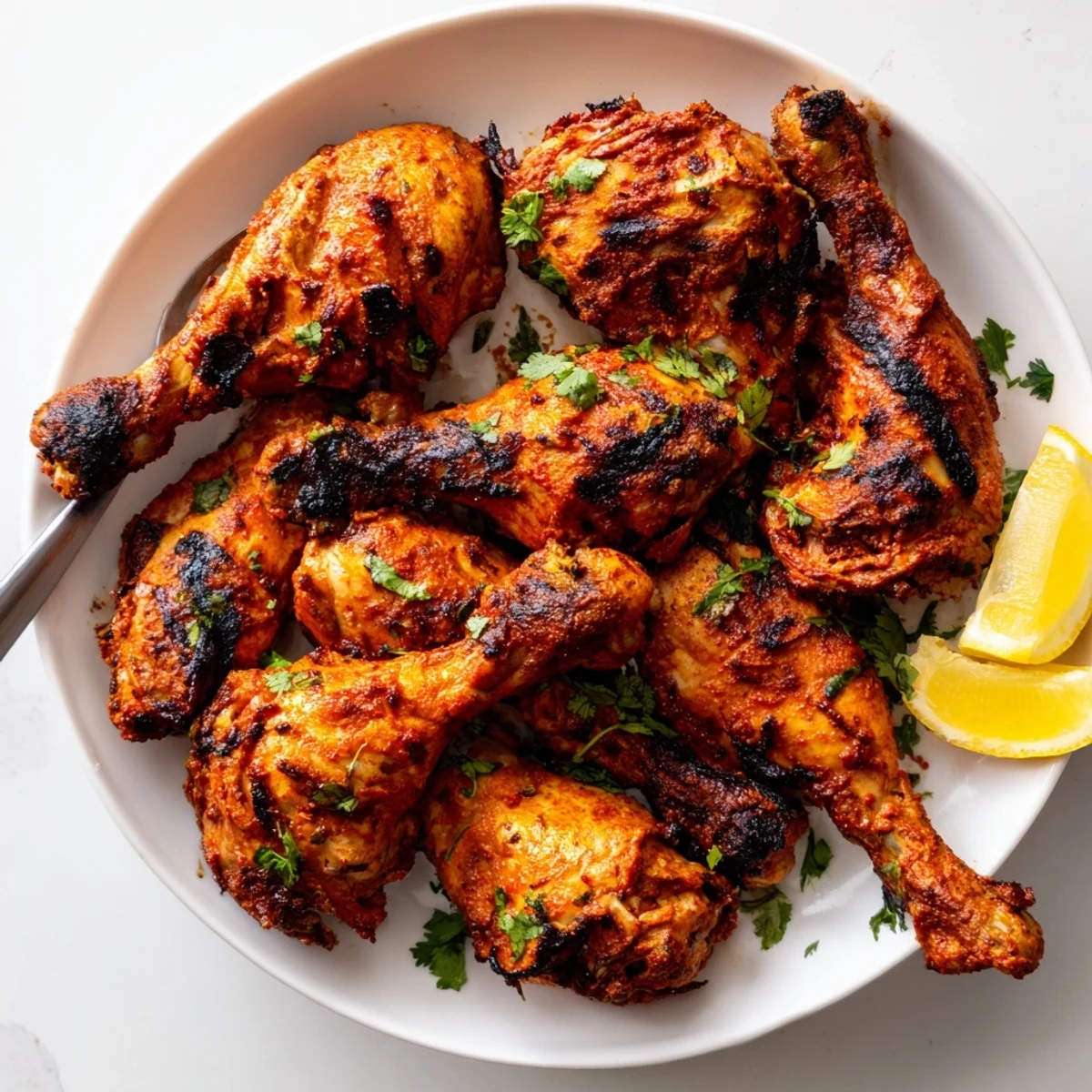
 There is something deeply satisfying about pulling a tray of crimson, blistered chicken from the oven when the rest of the world is dark and cold outside. It turns a regular Tuesday into an event worth looking forward to.
What to Serve Alongside
Warm naan is the obvious choice, but basmati rice works just as well if you want something lighter to soak up the juices. A cooling cucumber raita or a simple kachumber salad of diced onions, tomatoes, and cilantro provides the perfect contrast to all that smoky heat.
Working With Boneless Chicken
If you prefer boneless thighs or breasts, reduce the cooking time to about 20 to 25 minutes and check early because leaner cuts dry out fast under that intense oven heat. The marinade works exactly the same way, though you will lose some of the visual drama that bones provide.
Getting That Smokier Flavor
If you have access to an outdoor grill with charcoal, use it, because nothing truly replicates the flavor of live coals licking at yogurt coated chicken. For an indoor trick, you can place a small piece of natural charcoal on your stovetop flame until it glows red, then set it in a small foil cup among the chicken on the baking sheet for the last five minutes of roasting.
- Soak wooden skewers for 30 minutes if you decide to thread boneless pieces for faster, more even cooking.
- Always check labels on your spice blends to confirm they are gluten free, since some commercial mixes include fillers.
- Remember that the chicken will look quite red before it goes in the oven, and that is completely normal.
 Pin It
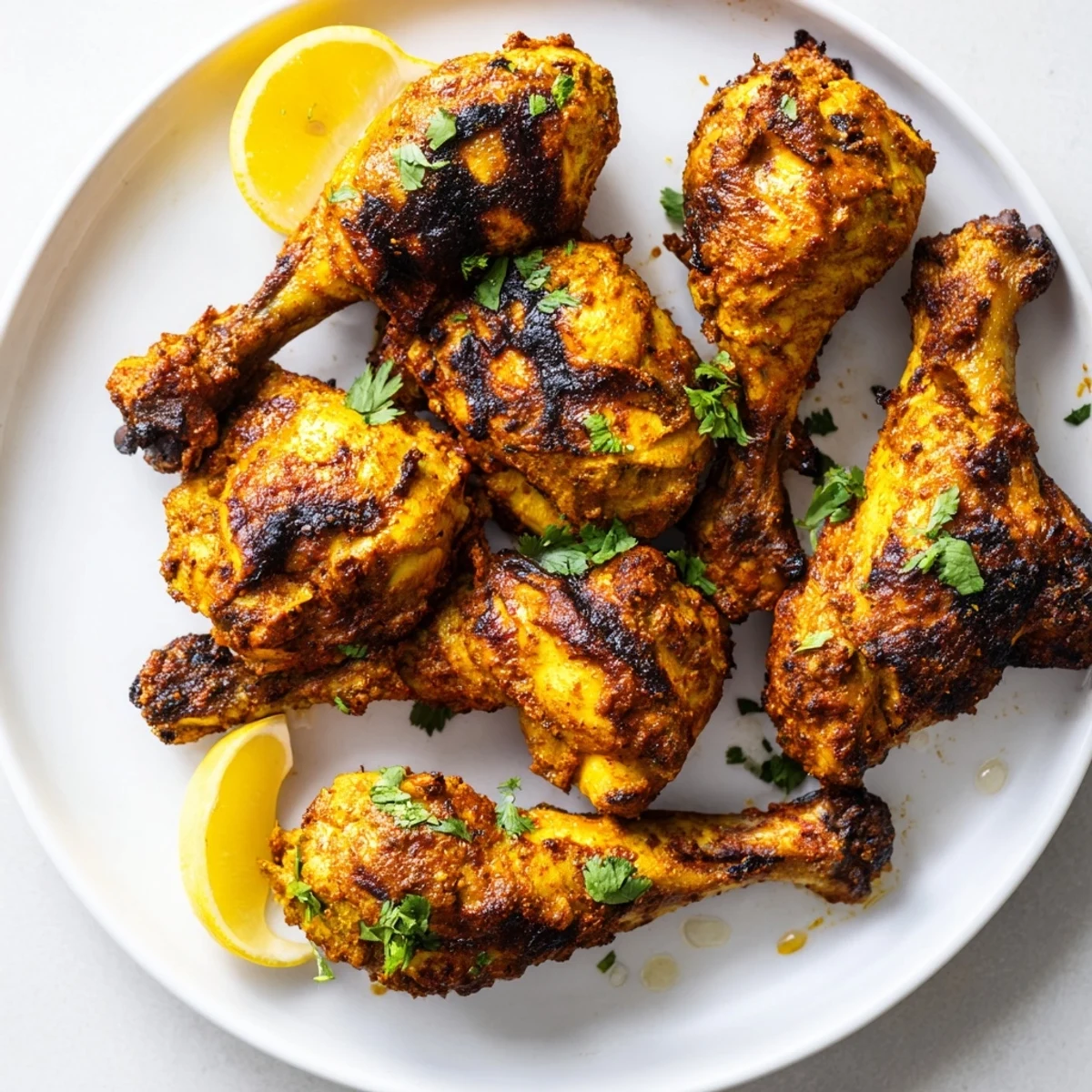
 This is the kind of recipe that makes your kitchen feel alive, and once you nail it, you will find yourself reaching for it whenever you need something bold and comforting. Share it generously, because it only tastes better when there is good company at the table.
Recipe Questions
- → How long should I marinate the chicken?
-
Allow at least 4 hours for the yogurt and spices to tenderize and flavor the meat; overnight (8–24 hours) yields deeper color and more pronounced spices.
- → Can I use boneless pieces instead of bone-in?
-
Yes. Boneless cuts cook faster—reduce roasting time and watch for an internal finish while preserving charred edges for texture.
- → How do I get a smoky char without a grill?
-
Broil briefly at the end of roasting to encourage charring, or use a cast-iron skillet over high heat to sear and develop smoky notes.
- → What temperature and timing work best in the oven?
-
Preheat to 220°C (425°F) and roast on a wire rack for 30–35 minutes, turning and basting once, until juices run clear and pieces are slightly charred.
- → How can I adjust the heat level?
-
Reduce or omit chili powder to soften the spice, or increase it and add a pinch of cayenne for more kick. Balance with extra yogurt or lemon if needed.
- → Any tips for serving and accompaniments?
-
Garnish with chopped cilantro and lemon wedges. Pair with steamed rice, warm flatbread, or a cooling yogurt-based side to balance spices.