
 Pin It
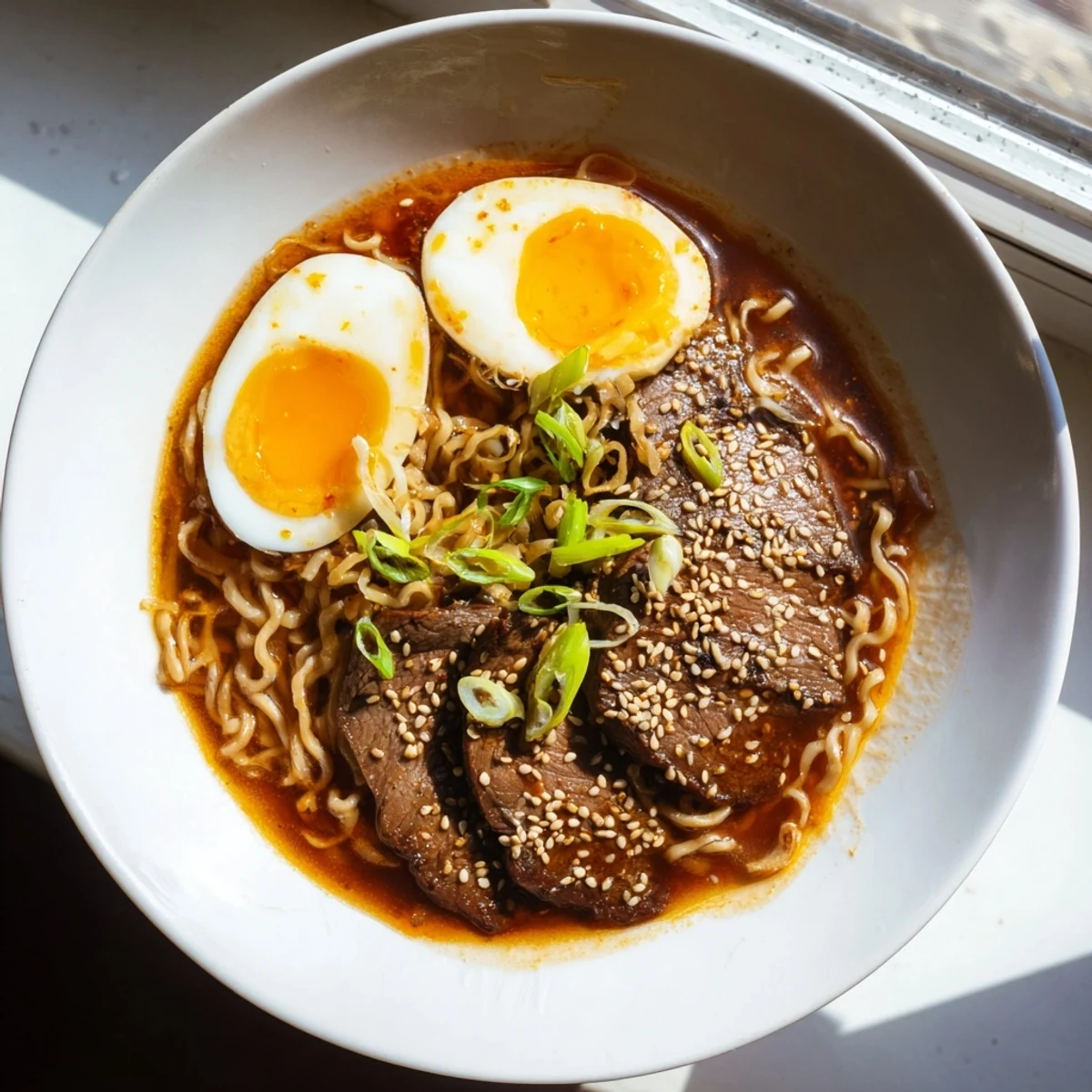
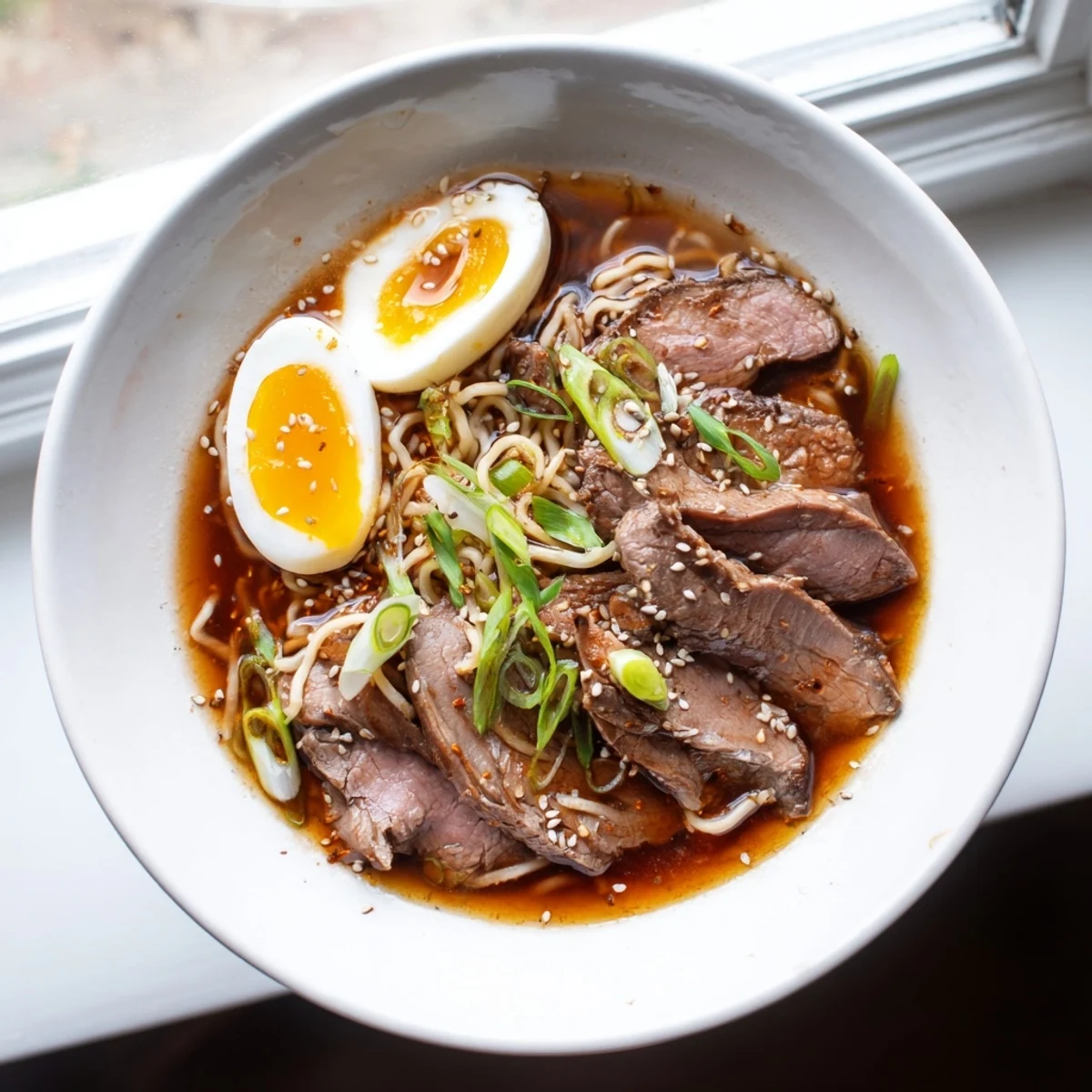
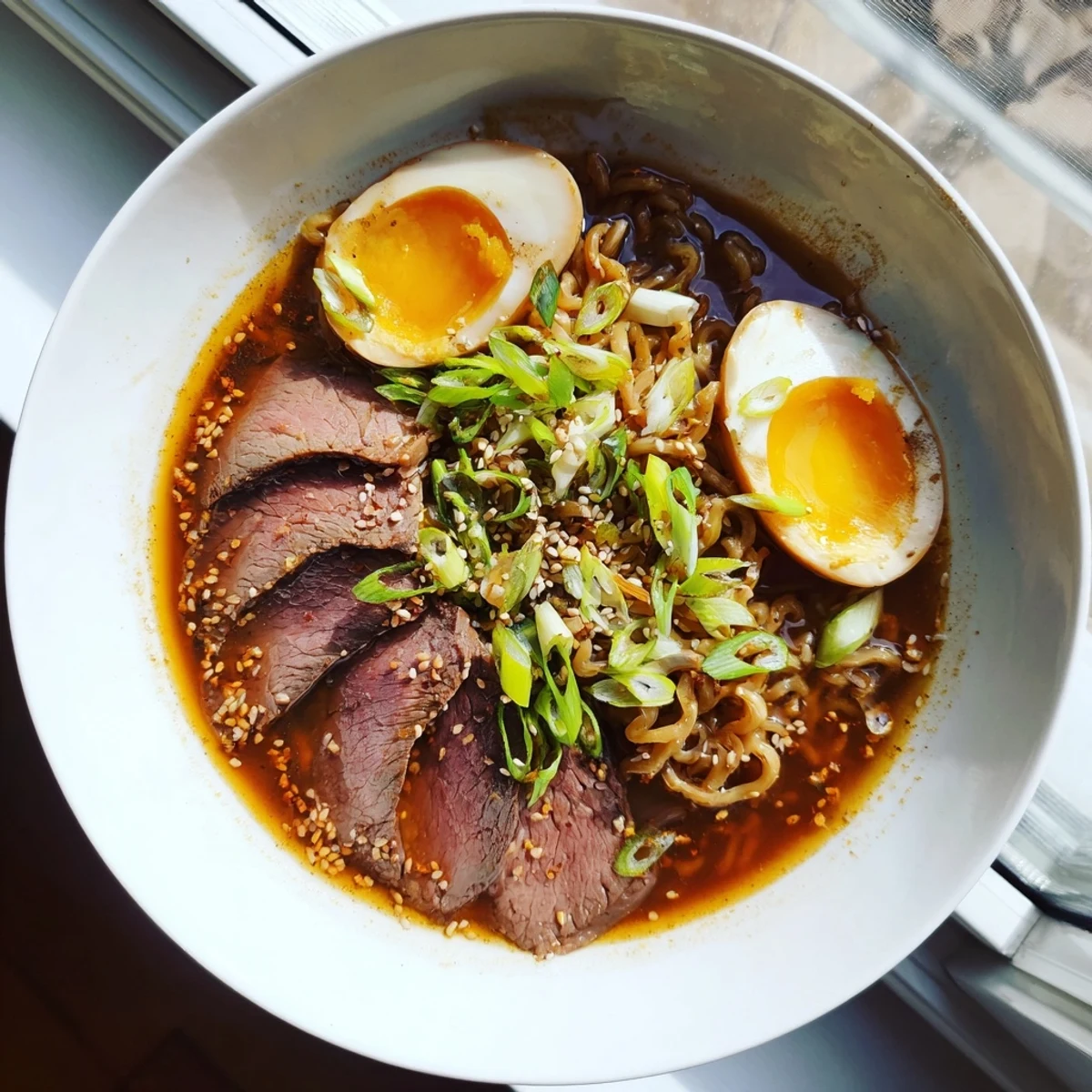
 This dish features thinly sliced sirloin marinated in soy sauce and sesame oil, seared to perfection. The broth combines miso paste, chili garlic sauce, and ginger for a spicy, savory depth. Fresh ramen noodles provide the base, while soft-boiled eggs add a creamy texture. Finished with scallions, sesame seeds, and optional chili oil, this bowl offers a perfect balance of heat and comfort.
The first time I made ramen from scratch, I burned the garlic and nearly gave up before I even started. But something about that pot of beef broth simmering on the stove, the way the steam curled up and filled my kitchen with warmth, made me push through and salvage it. I've learned since then that ramen isn't about perfection—it's about building layers of flavor that come together in one beautiful, spicy bowl.
I made this for my friend on a freezing January evening, and I'll never forget how she closed her eyes on the first slurp and just sat there, quiet and content. That's when I realized ramen isn't just noodles in broth—it's comfort wrapped up in a bowl, something that makes people slow down and actually be present.
Ingredients
- Sirloin or flank steak, thinly sliced (300 g): Thin slices cook in seconds and absorb the broth beautifully; partially freeze the meat before slicing to make it easier to get those clean, delicate pieces.
- Low-sodium beef or chicken stock (1.5 L): This is your foundation—use the best broth you can find because it's the soul of the dish.
- Miso paste (2 tbsp): Don't skip this; it adds depth and a subtle umami note that transforms the broth from good to unforgettable.
- Soy sauce (1 tbsp for broth, 1 tbsp for beef): Salt and savory depth, but go easy if your stock is already salted.
- Chili garlic sauce (1 tbsp): The fire in this dish; adjust based on your heat tolerance and the brand you use, as they vary wildly in spice level.
- Mirin (1 tbsp): A touch of sweetness that balances the spice and brings everything into harmony.
- Fresh ginger and garlic: These are the first flavors to kiss the hot oil, and they set the tone for everything else.
- Fresh ramen noodles: If you can find them, they cook faster and have a silkier texture than dried ones.
- Large eggs: Size matters here—large eggs give you that perfect ratio of white to yolk when boiled for exactly 6 minutes.
- Scallions, nori, and sesame seeds: These toppings aren't just garnish; they're texture, freshness, and visual life for your bowl.
Instructions
- Marinate your beef:
- Toss your beef slices with soy sauce, sesame oil, and pepper in a bowl. The marinade will start working immediately, but you can let it sit for as long as you're building the rest of the dish—even 30 minutes makes a difference.
- Get your eggs into an ice bath:
- Boil them for exactly 6 minutes, then plunge them straight into ice water to stop the cooking. This is where you'll get that creamy, jammy yolk that makes everyone fall in love with your ramen.
- Build the broth base:
- Heat sesame oil in a large pot and let the ginger and garlic perfume it for just a minute—you want fragrant, not burned. Stir in your miso paste first (it dissolves better with a little oil), then add the chili garlic sauce, soy, and mirin before pouring in your stock.
- Let the broth find itself:
- A gentle simmer for 10 minutes lets all those flavors marry together. Don't rush this—it's the difference between a good bowl and one that tastes like you actually care.
- Sear the beef quickly:
- Get your skillet screaming hot and hit those marinated slices with just 2-3 minutes per side. You want them to stay tender and slightly rare in the center, not rubbery.
- Cook noodles and assemble:
- Boil your noodles according to package directions, drain them well, and divide among bowls. Pour that beautiful broth over the top, then crown each bowl with beef, a halved egg, scallions, nori, sesame seeds, and anything else you're adding.
 Pin It
 There's a moment right before I pour the broth into a bowl of hot noodles when the kitchen fills with this incredible smell—spice and ginger and garlic all mingling together—and that's when I know I've gotten it right. It's that moment that makes me want to cook this ramen again and again.
The Spice Level Conversation
Spice is deeply personal, and this recipe is designed to be bold without being mean. Start with 1 tbsp of chili garlic sauce and taste before you commit to more; some brands are aggressive and others are gentle. If you find yourself sweating on the first slurp, cut back next time, but if you're craving more heat, drizzle that chili oil over the top of your finished bowl where it'll catch on the noodles and beef.
Timing and Prep Work
The secret to making ramen feel effortless is to do your prep before you start cooking. Slice your beef, mince your ginger and garlic, slice your scallions—have everything ready to go so that when the broth is simmering, you're not scrambling. This dish comes together fast once you're in motion, and the last thing you want is cold noodles while you're still chopping.
Customizing Your Bowl
One of the joys of making ramen at home is that you can build it exactly how you want it. Like vegetables more than beef? Add some bok choy or mushrooms to the broth. Want it meatier? Toss in some ground beef or pulled chicken. The framework is solid; everything else is up to you and what sounds good on any given day.
- Pickled ginger and bamboo shoots add brightness and crunch if you want to layer in more complexity.
- A soft-boiled egg is non-negotiable, but if you don't have time, a poached egg works beautifully too.
- Leftover broth keeps for three days in the fridge and gets better as the flavors deepen, so don't hesitate to make extra.
 Pin It
 Making ramen is meditation in a pot. You'll make this once, and you'll want to make it again, and every time you do it'll feel a little easier and taste a little better.
Recipe Questions
- → How spicy is the broth?
-
The heat level is adjustable. One tablespoon of chili garlic sauce provides a medium spice, but you can reduce it for milder flavor or add extra chili oil for more heat.
- → Can I use a different protein?
-
Yes, thinly sliced chicken breast or pork belly works excellently as a substitute for the beef. Just ensure the meat is sliced thinly for quick cooking.
- → What type of noodles should I use?
-
Fresh ramen noodles are ideal for their texture, but high-quality dried ramen or even udon noodles can be used if ramen is unavailable.
- → How do I get perfect soft-boiled eggs?
-
Boil large eggs for exactly 6 minutes, then immediately transfer them to an ice bath to stop the cooking process and prevent the yolk from solidifying.
- → Can I make the broth ahead of time?
-
Absolutely. The broth can be made in advance and stored in the refrigerator for up to 3 days. Reheat gently before assembling the bowls.