
 Pin It
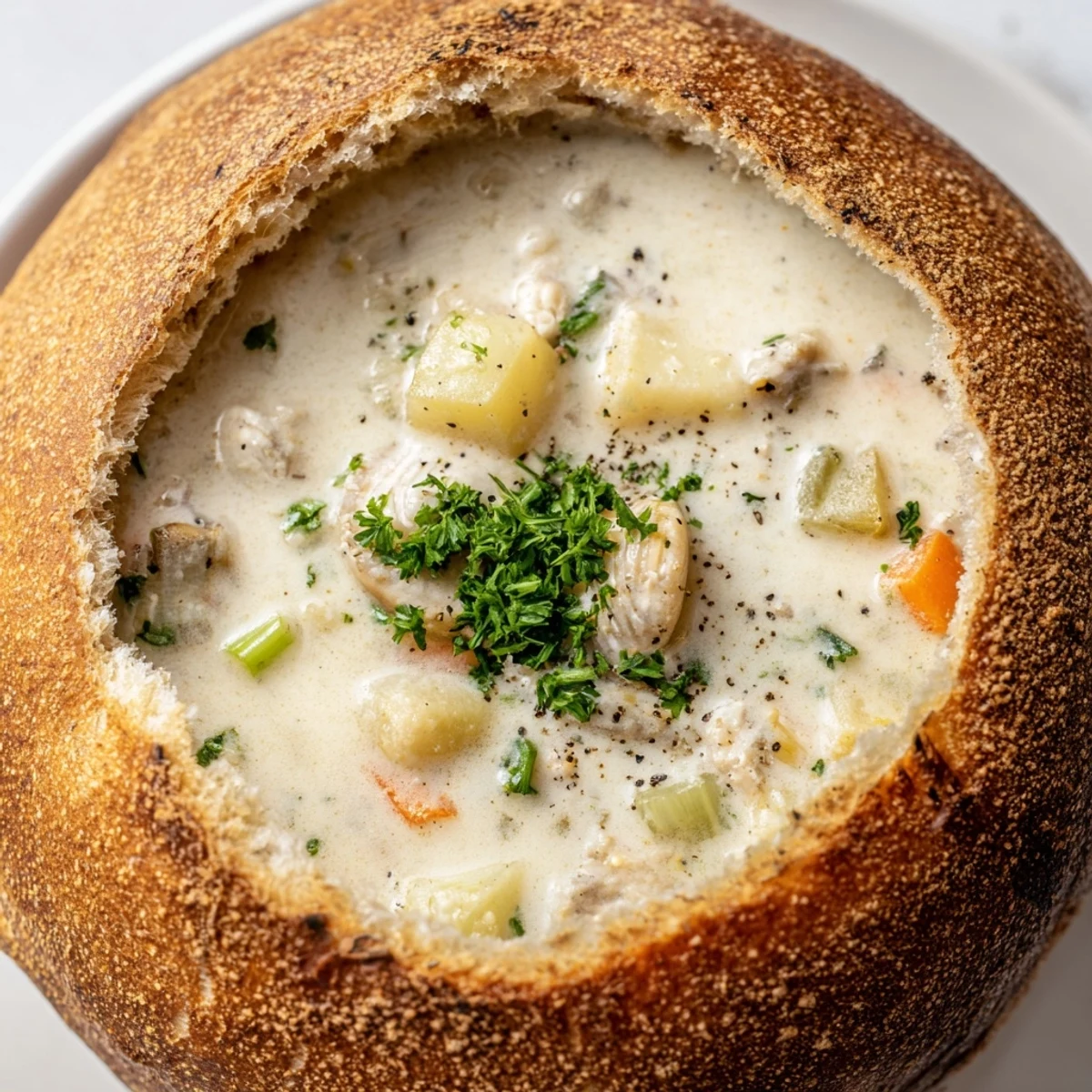
 This creamy New England-style chowder combines tender clams, diced potatoes, and a mix of celery, onion, and carrots in a velvety broth made with cream and butter. The hearty mix is gently simmered with herbs like thyme and parsley, then ladled into hollowed sourdough bread bowls, offering an inviting blend of flavors and textures. The bread bowl's crusty exterior and soft interior perfectly complement the chowder's richness, making it a satisfying one-pot meal ideal for a comforting dinner.
The first time I made clam chowder in bread bowls, I'd just returned from a coastal trip where I watched fishermen unload their catch at dawn. Standing in my kitchen that evening, I wanted to recreate that salty, briny feeling—that sense of something pulled fresh from the sea. I bought canned clams instead of fresh, and honestly, they work beautifully here. The bread bowl idea came from wanting the whole experience in one bowl, edible walls and all.
I made this for my sister on a gray October afternoon when she was going through a rough patch. She sat at the kitchen counter while I hollowed out the bread bowls, and the smell of butter and celery sautéing seemed to shift something in the room. By the time we sat down with those steaming bowls, we were laughing about the bread crumbs everywhere and how the first spoonful felt like a warm hug.
Ingredients
- Canned chopped clams: Don't skip the juice—it's liquid gold for flavor and becomes the backbone of your broth. I always reserve it first thing and taste it; if it's too strong, I cut it with a splash of bottled clam juice.
- Russet potatoes: They break down slightly and thicken the chowder naturally, which is why they matter more than you'd think. Dice them smaller if you want them to soften faster.
- Onion, celery, and carrots: This trio (the holy trinity of cooking) needs to be finely chopped so they become part of the texture rather than chunks you notice.
- Heavy cream and whole milk: The cream carries the richness, but the milk keeps it from being too heavy—balance is everything here.
- Butter and flour: These make the roux that thickens everything. Don't skip the cooking time; you want the flour to lose its raw taste.
- Bay leaves, thyme, and parsley: These dried herbs are quiet but essential; they give the chowder depth without shouting.
- Sourdough bread bowls: Choose ones with thick walls that can hold hot liquid without collapsing. A bakery counter or good grocery store usually has them individually wrapped.
Instructions
- Hollow out your bread bowls:
- Slice off the top of each loaf and scoop out the insides with your fingers or a small spoon, leaving enough bread for the walls to stay sturdy. I usually leave about half an inch all around.
- Start the aromatic base:
- Melt butter over medium heat and add your onion, celery, and carrots. Let them soften for a full five minutes, until the kitchen smells like comfort. You want them yielding and fragrant, not raw.
- Make a proper roux:
- Sprinkle the flour over the softened vegetables and stir constantly for two minutes. This cooks out the floury taste and creates a thick paste that will thicken your broth.
- Build the broth:
- Whisk in the clam juice slowly, breaking up any lumps as you go. Add potatoes and the bay leaves, thyme, and parsley. Bring to a gentle simmer and let the potatoes soften—about 10 to 12 minutes.
- Add the clams and cream:
- Lower the heat and stir in the clams, heavy cream, and milk. The mixture should steam gently but never bubble hard, or the cream can break. Stir often for five to seven minutes until everything is hot and creamy.
- Season and serve:
- Taste as you go, adding salt and pepper. Remember that clams are salty, so go easy. Ladle into the bread bowls and serve immediately while everything is hot.
 Pin It
 There's a moment when the cream hits the pot and everything goes pale and luxurious, and that's when you know it's working. My nephew called this "fancy soup in a bread boat" and refused to eat anything else that week.
Why Sourdough Bowls Are the Star
The tanginess of sourdough cuts through the richness of the chowder perfectly, and the bread absorbs the broth as you eat, becoming almost part of the dish. It's not just a vessel—it's functional and delicious, which is rare for edible containers. Plus, there's something about eating straight from bread that makes people slow down and actually taste what they're eating.
Making This Feel Special
This dish lands differently when you take five extra minutes to set the table or light a candle. I've made it on weeknights just for myself, and other times for small dinner parties, and it always feels like you tried harder than you actually did. The bread bowls do that heavy lifting for you.
Variations and Tweaks
Once you understand the basic structure—roux, broth, vegetables, clams, cream—you can play with it. Some people add diced bacon or celery salt, others finish with a splash of white wine or a tiny bit of hot sauce to cut the heaviness. I've even spooned extra clams on top before serving because why not.
- A pinch of cayenne or hot sauce wakes up the whole bowl without overwhelming the brininess.
- Fresh parsley or crispy bacon bits scattered on top add texture and a little showiness.
- If you want something lighter, substitute half-and-half for the heavy cream and no one will know the difference.
 Pin It
 This chowder feels like something meant to be shared, whether you're feeding a crowd or just one person you want to feel cared for. The bread bowl makes it impossible to rush, and somehow that's exactly the point.
Recipe Questions
- → How do I prepare the sourdough bread bowls?
-
Slice off the top of each sourdough loaf and hollow out the center, leaving a thick shell to hold the chowder without leaking.
- → Can I use fresh clams instead of canned?
-
Yes, fresh clams can be used but ensure they are cleaned thoroughly and cooked before adding to the chowder to preserve flavor and safety.
- → What thickening method is used for this chowder?
-
A roux is made by cooking flour in melted butter before whisking in clam juice, which thickens the broth for a creamy consistency.
- → Which herbs enhance the flavor best?
-
Dried thyme, parsley, and bay leaves provide a balanced herbal note that complements the seafood and creamy base.
- → How should I store leftovers?
-
Keep any leftovers refrigerated in an airtight container and consume within 2 days. Reheat gently to avoid curdling.