
 Pin It
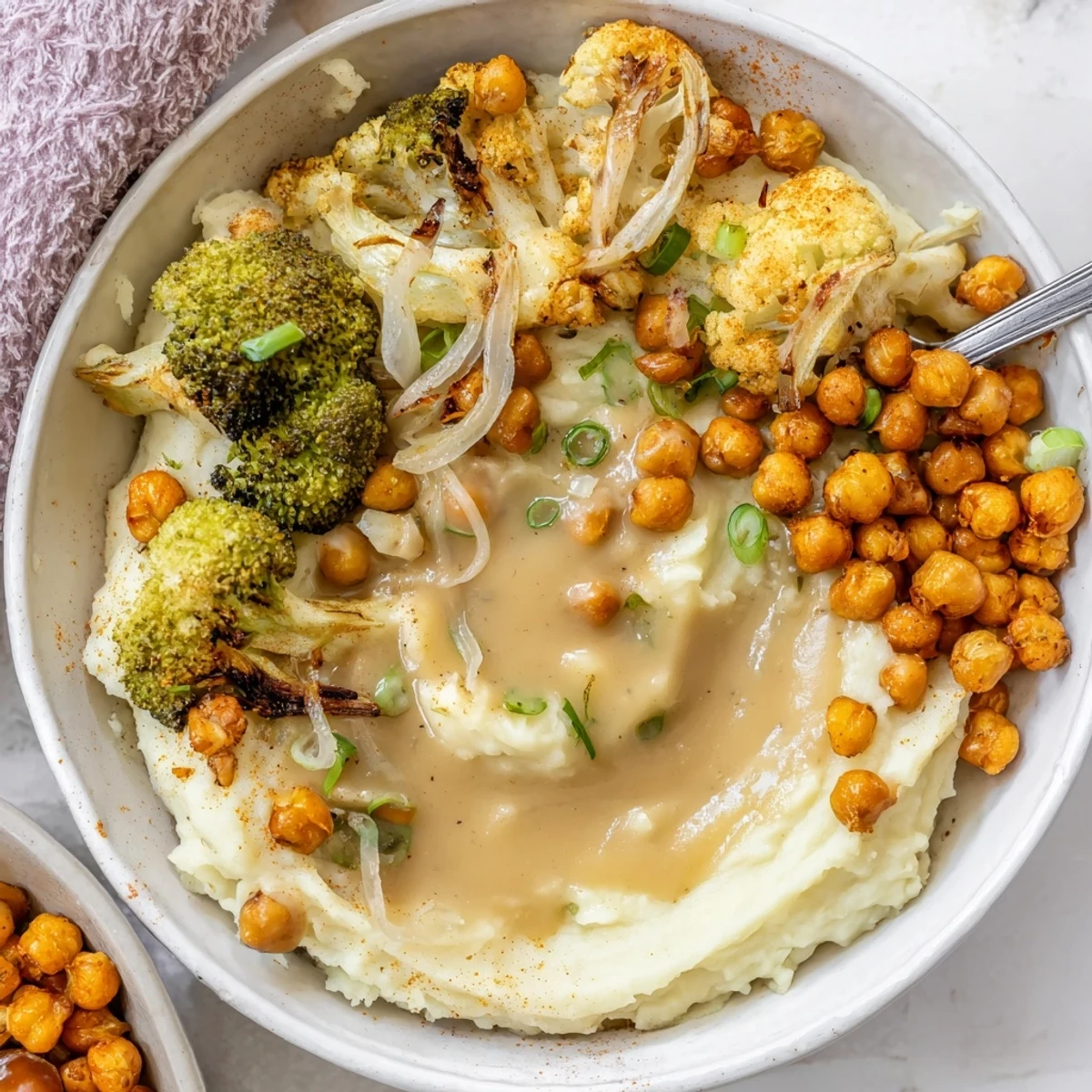
 These vegan mashed potato bowls layer creamy, whipped Yukon Gold potatoes with oven-roasted cauliflower, broccoli and carrots, crisp spiced chickpeas and a rich savory gravy. Start potatoes boiling while vegetables roast at 220°C; mash with plant milk and vegan butter for silkiness. Finish with chives or crispy onions and serve warm for comforting, plant-forward bowls.
The rain was hammering against the kitchen window so hard I could barely hear the oven timer, and honestly that suited me fine because all I wanted was to stand there mashing potatoes while the house filled with the smell of roasting broccoli and smoked paprika. There is something deeply therapeutic about building a bowl from scratch when the world outside is chaos. This vegan mashed potato bowl became my cold weather ritual, the dish I make when comfort is nonnegotiable. It is hearty enough to satisfy anyone, plant based or not, and messy enough to feel like real cooking without demanding real effort.
I made these bowls for a friendsgiving potluck where I was the only vegan, and I walked in half apologizing for bringing something without butter or cream. By the end of the night the bowl was scraped clean and two people texted me for the recipe before they even got home. That moment taught me to stop underselling plant food and just let it speak.
Ingredients
- Yukon Gold or Russet potatoes (1.5 kg): Yukon Golds give you a naturally buttery texture without dairy, and I learned after several mushy disasters that peeling and dicing them uniformly is the real secret to smooth mash.
- Unsweetened plant based milk (1/2 cup): Oat milk is my go to because it is neutral and creamy, but soy works just as well if that is what you have open in the fridge.
- Vegan butter (3 tbsp): This adds the richness people expect from mashed potatoes, and skipping it makes the whole bowl taste like it is trying too hard to be healthy.
- Garlic powder (1 tsp): Garlic powder dissolved into hot potatoes distributes flavor more evenly than fresh garlic, which can leave harsh raw spots.
- Cauliflower and broccoli florets (2 cups each): Cut them into similar sized pieces so they roast at the same rate and you are not picking out charred bits while the rest is still crunchy.
- Carrot (1 large, sliced): The sweetness of roasted carrot balances the earthy greens and adds a pop of color that makes the bowl look intentional.
- Chickpeas (1 can, rinsed and drained): Pat them completely dry with a towel before seasoning because moisture is the enemy of crispiness.
- Smoked paprika and ground cumin (1/2 tsp each): These two spices transform canned chickpeas into something you will snack on before they ever reach the bowl.
- Vegetable broth (2 cups): Use a good quality broth because the gravy relies entirely on it for depth, and a bland broth makes a bland sauce you cannot fix later.
- Nutritional yeast (1 tbsp for gravy, optional 2 tbsp for potatoes): This is the secret weapon that adds umami and a hint of cheesiness without any dairy.
Instructions
- Get the oven hot:
- Preheat to 220 degrees C (425 degrees F) and line a baking sheet with parchment paper so nothing sticks and cleanup is a dream.
- Roast the vegetables:
- Toss the cauliflower, broccoli, and carrot with olive oil, paprika, thyme, salt, and pepper, then spread everything in a single even layer on the sheet without crowding. Roast for 25 to 30 minutes, flipping halfway through, until the edges turn golden and the centers are tender.
- Crisp the chickpeas:
- On a separate small tray, toss the dried chickpeas with olive oil, smoked paprika, cumin, salt, and pepper, then bake alongside the vegetables for 20 to 25 minutes, giving the pan a shake every now and then so nothing burns.
- Boil and mash the potatoes:
- Cover the diced potatoes with cold salted water in a large pot, bring to a rolling boil, then drop the heat and simmer 15 to 20 minutes until a fork slides through without resistance. Drain well, return to the pot, and mash with plant milk, vegan butter, garlic powder, salt, and pepper until smooth and creamy.
- Make the gravy:
- In a small saucepan over medium heat, whisk olive oil and flour together for one to two minutes until the roux turns a pale gold color, then slowly pour in the broth while whisking constantly to prevent lumps. Stir in soy sauce, nutritional yeast, onion powder, salt, and pepper, then let it simmer and thicken for about five minutes, whisking often.
- Build the bowls:
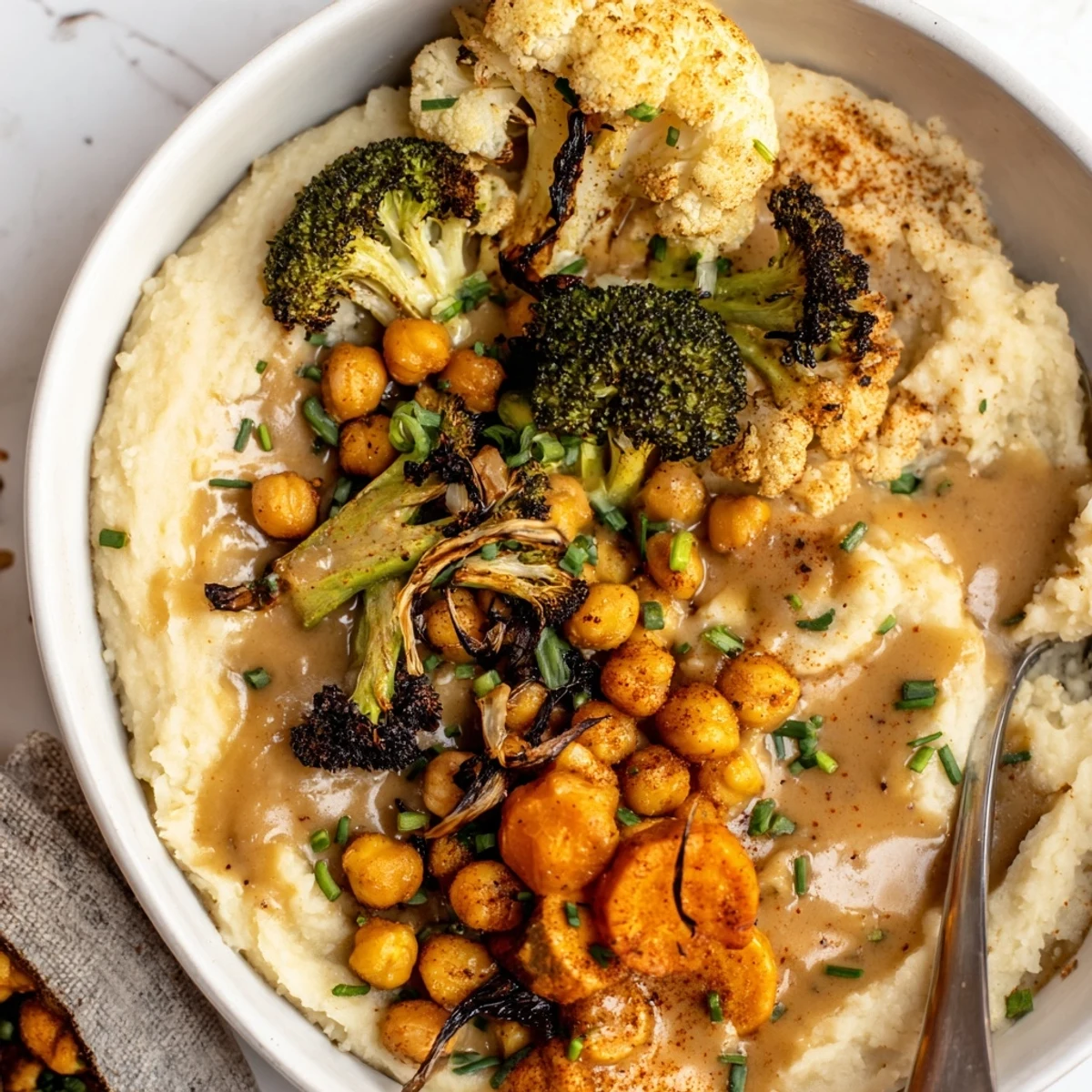
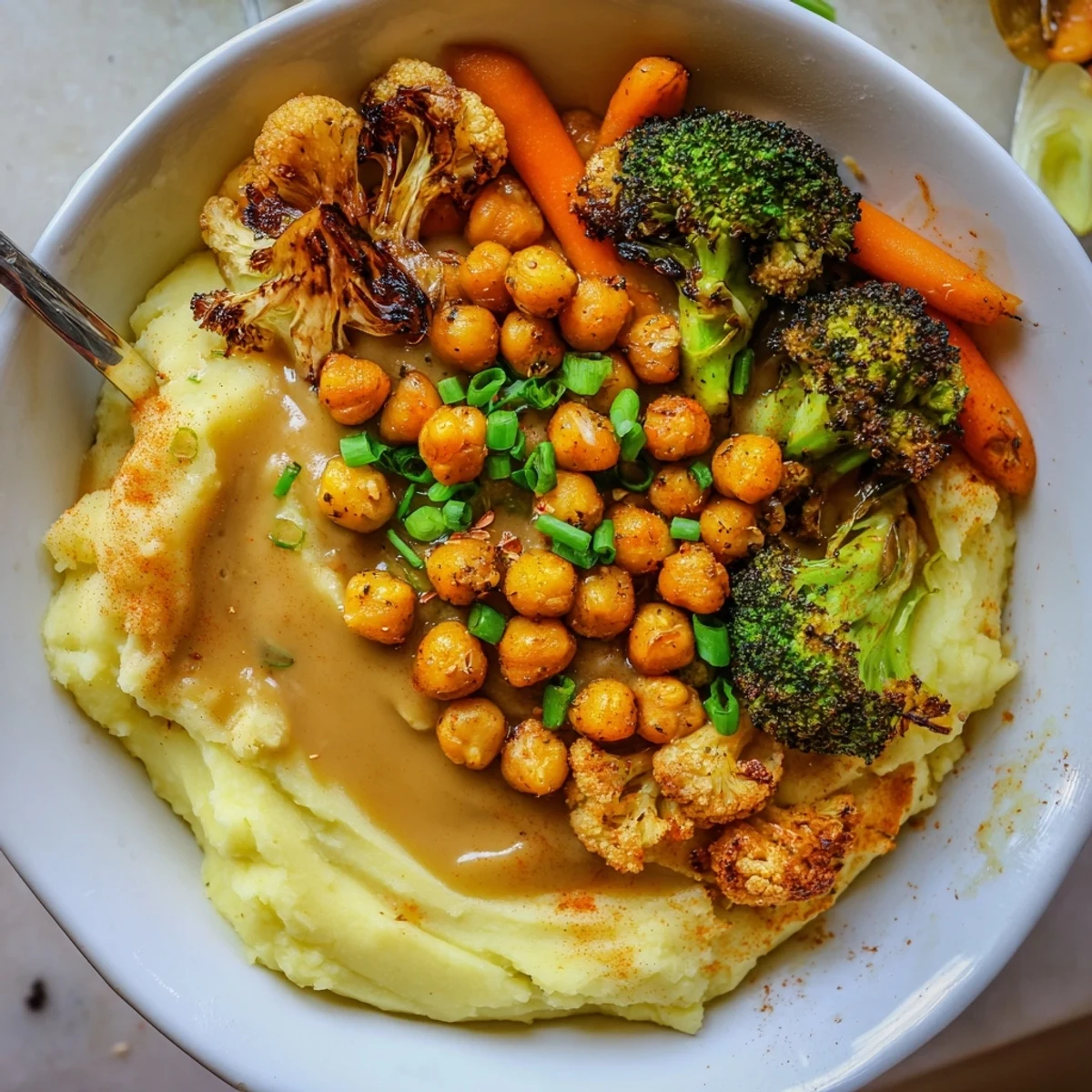
- Spoon a generous mound of mashed potatoes into each bowl, arrange the roasted vegetables and crispy chickpeas on top, and finish with a big pour of gravy plus whatever toppings make you happy.
 Pin It
 The first time I got the gravy right, thick enough to coat the back of a spoon with that glossy sheen, I stood at the stove tasting it with a spoon and laughing because it tasted like the gravy my grandmother used to make from pan drippings. Food does not need animal products to carry memory.
Swaps and Seasonal Tweaks
In fall I throw cubed butternut squash and halved brussels sprouts onto the roasting pan instead of broccoli, and the whole bowl suddenly feels like Thanksgiving on a Tuesday. During summer, zucchini and bell peppers roast beautifully and lighten the dish considerably. The chickpeas can be replaced with crispy tofu cubes if you want more protein, but honestly the chickpeas are so good I rarely bother switching.
Storage and Reheating
Store each component separately in airtight containers in the refrigerator for up to four days, because mixing everything together turns the potatoes into a starchy puddle overnight. Reheat the potatoes with a splash of plant milk and a stir to bring back the creamy texture, and pop the chickpeas back in the oven or a hot skillet for five minutes to restore their crunch. The gravy thickens considerably in the fridge, so loosen it with a little broth or water while reheating and whisk until smooth.
Final Thoughts Before You Cook
This recipe is more of a framework than a rigid set of rules, and once you master the components you will find yourself mixing and matching based on what needs using up in your fridge. Trust your instincts with seasoning and do not be afraid to taste and adjust as you go.
- Salt the potato water generously because this is your only chance to season from within.
- Keep an eye on the chickpeas in the last five minutes because they go from crispy to burnt faster than you expect.
- Always make extra gravy because you will want to pour it over everything the next day.
 Pin It
 Make this bowl on a night when you need dinner to feel like a small act of kindness toward yourself. It is warm, it is filling, and it reminds you that comfort food does not need to be complicated.
Recipe Questions
- → How do I make the mashed potatoes extra creamy?
-
Use Yukon Golds or a floury variety, drain well and mash while still hot. Warm the plant milk and vegan butter before adding, mash gently or use a ricer for silky texture—avoid overworking to prevent a gluey result.
- → What oven temperature and time work best for the roasted vegetables?
-
Roast at 220°C (425°F) for 25–30 minutes, stirring once. Cut vegetables into even pieces and spread in a single layer so they brown and become tender without steaming.
- → How can I get the chickpeas nice and crispy?
-
Thoroughly dry rinsed chickpeas, toss with oil and spices, then spread on a small baking tray in a single layer. Bake 20–25 minutes, shaking the pan occasionally; broil briefly at the end if you want extra crunch.
- → How do I thicken the vegan gravy or make it gluten-free?
-
Make a roux with oil and all-purpose flour and simmer with broth until thickened, or swap to a cornstarch slurry for a gluten-free option. Use tamari or a gluten-free soy alternative if needed.
- → Can I prep components ahead and how should I reheat them?
-
Yes—store mashed potatoes, roasted vegetables and gravy separately in airtight containers for 3–4 days. Reheat potatoes gently with a splash of plant milk; warm gravy on the stove; re-crisp chickpeas in the oven for a few minutes.
- → What simple swaps work for allergies or flavor variations?
-
Use oat or rice milk and soy-free condiments to avoid soy; choose gluten-free flour and tamari for gluten-free needs. Swap in seasonal veg like sweet potatoes or Brussels sprouts and add nutritional yeast for a cheesy note.