
 Pin It
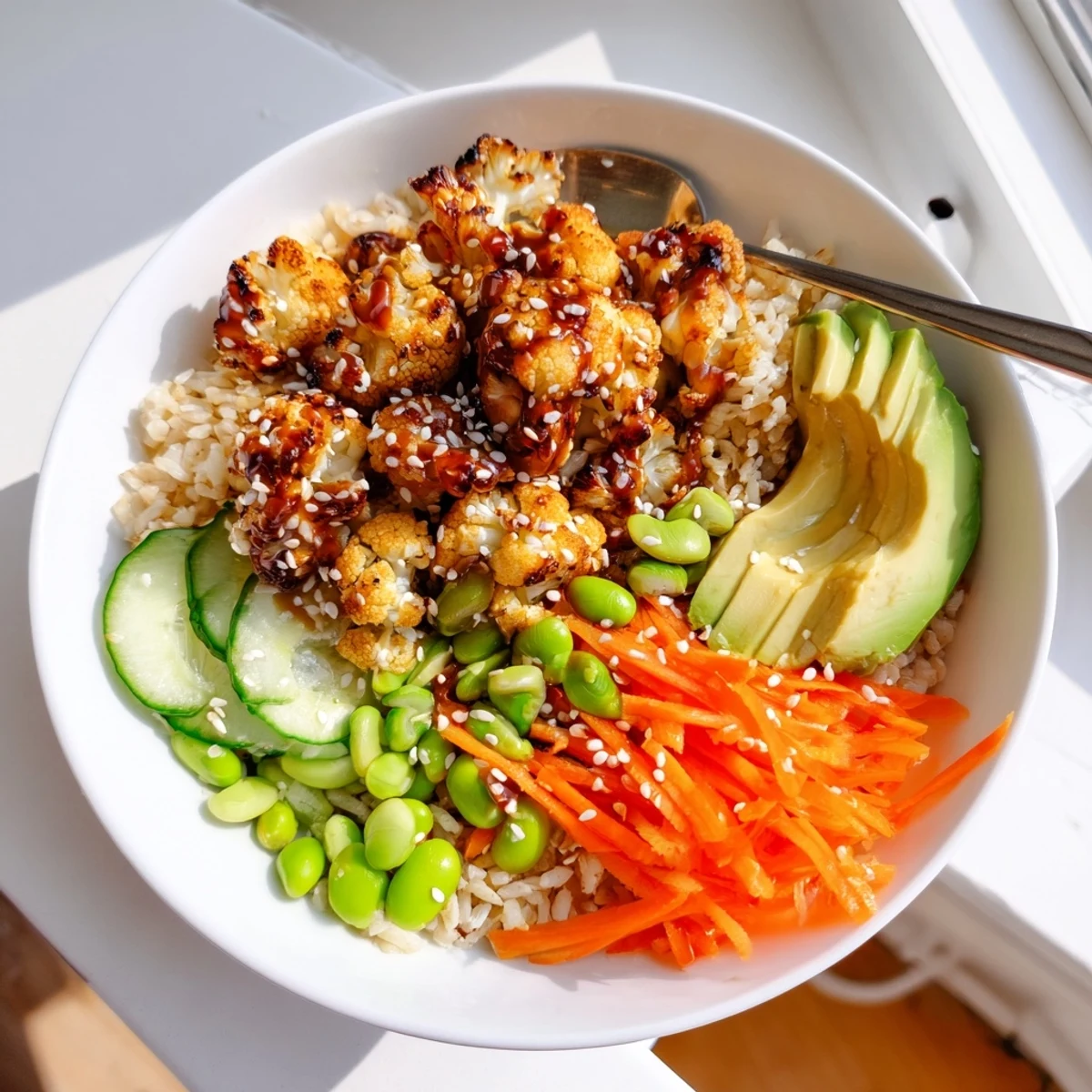
 Preheat oven to 220°C (425°F) and roast cauliflower florets tossed in olive oil, salt and pepper until golden and tender (25–30 minutes). Simmer soy, maple syrup, rice vinegar, sesame oil, garlic and ginger; thicken with a cornstarch slurry. Toss the warm florets in the teriyaki, then assemble over rice with carrots, cucumber, edamame, avocado, green onions and sesame seeds. Serves four; swap quinoa or cauliflower rice for a low‑carb option and refrigerate leftovers for 3–4 days.
The smell of caramelized teriyaki hitting a hot oven sheet is enough to make anyone reconsider every doubt they ever had about cauliflower. My neighbor actually knocked on my door once asking what I was cooking because the scent had drifted through the shared hallway. That was the afternoon I realized this bowl was going into permanent rotation in my kitchen.
I made a double batch of these bowls for a potluck expecting people to politely pick at them, and they disappeared before the pizza did. There is something deeply satisfying about watching someone who usually ignores vegetables go back for seconds of cauliflower. That potluck taught me to never underestimate a good sauce on a roasted vegetable.
Ingredients
- 1 large head cauliflower, cut into florets: Try to keep the florets similar in size so everything roasts evenly instead of having some burnt and some still crunchy.
- 2 tbsp olive oil: A light coating is all you need since too much oil makes the cauliflower steam rather than roast and get those crispy edges.
- Half tsp salt and quarter tsp black pepper: Simple seasoning before roasting lets the cauliflower flavor come through before the sauce takes over.
- One third cup soy sauce: Use a good quality soy sauce here because it is the backbone of the entire teriyaki flavor and a bland one will show.
- 3 tbsp maple syrup: Maple syrup gives a rounder sweetness than sugar and works beautifully for keeping this fully vegan.
- 1 tbsp rice vinegar: The acidity balances the sweetness and saltiness so the sauce does not feel heavy or one dimensional.
- 1 tbsp sesame oil: Just a tablespoon adds that toasty nutty aroma that makes everything taste like it came from a proper kitchen.
- 2 cloves garlic, minced, and 1 tbsp fresh ginger, grated: Fresh ginger and garlic make a difference you can actually taste so skip the powdered versions if you can.
- 1 tbsp cornstarch mixed with 3 tbsp water: This slurry is what transforms a thin liquid into a glossy sauce that actually coats the cauliflower instead of pooling at the bottom.
- 2 cups cooked brown rice or jasmine rice: Brown rice adds a chewy nuttiness but jasmine rice works if you want something softer and more fragrant.
- 1 large carrot julienned, 1 cucumber sliced, 1 cup shelled edamame, 1 avocado sliced: These fresh toppings bring crunch, creaminess, and color that make each bite interesting.
- Quarter cup sliced green onions and 1 tbsp sesame seeds: The garnishes might seem optional but they add a fresh bite and visual appeal that pulls everything together.
Instructions
- Roast the cauliflower:
- Preheat your oven to 220 degrees Celsius and spread the florets on a baking sheet. Drizzle with olive oil, season with salt and pepper, and toss with your hands until every piece is coated. Roast for 25 to 30 minutes, flipping them halfway through, until the edges turn golden and slightly charred in places.
- Build the teriyaki sauce:
- In a small saucepan, whisk together the soy sauce, maple syrup, rice vinegar, sesame oil, minced garlic, and grated ginger. Set it over medium heat and let it come to a gentle simmer while stirring occasionally so nothing catches on the bottom.
- Thicken with the slurry:
- Stir the cornstarch and water in a small bowl until smooth, then pour it slowly into the simmering sauce while whisking constantly. Keep cooking for another minute or two until the sauce turns glossy and coats the back of a spoon.
- Coat the cauliflower:
- Pull the roasted cauliflower from the oven and transfer it to a large bowl. Pour the warm teriyaki sauce over the top and toss gently until every floret is coated and shining.
- Assemble the bowls:
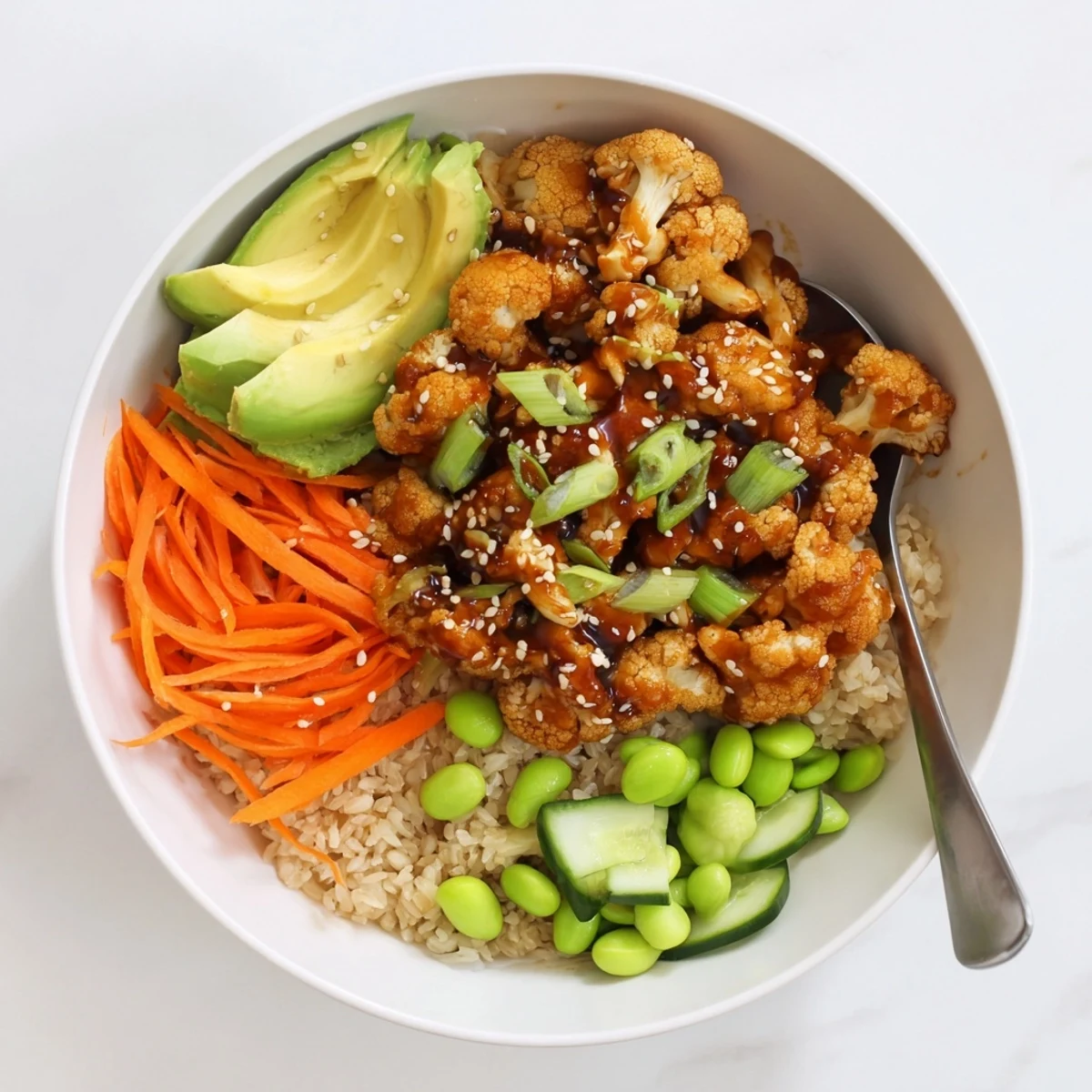
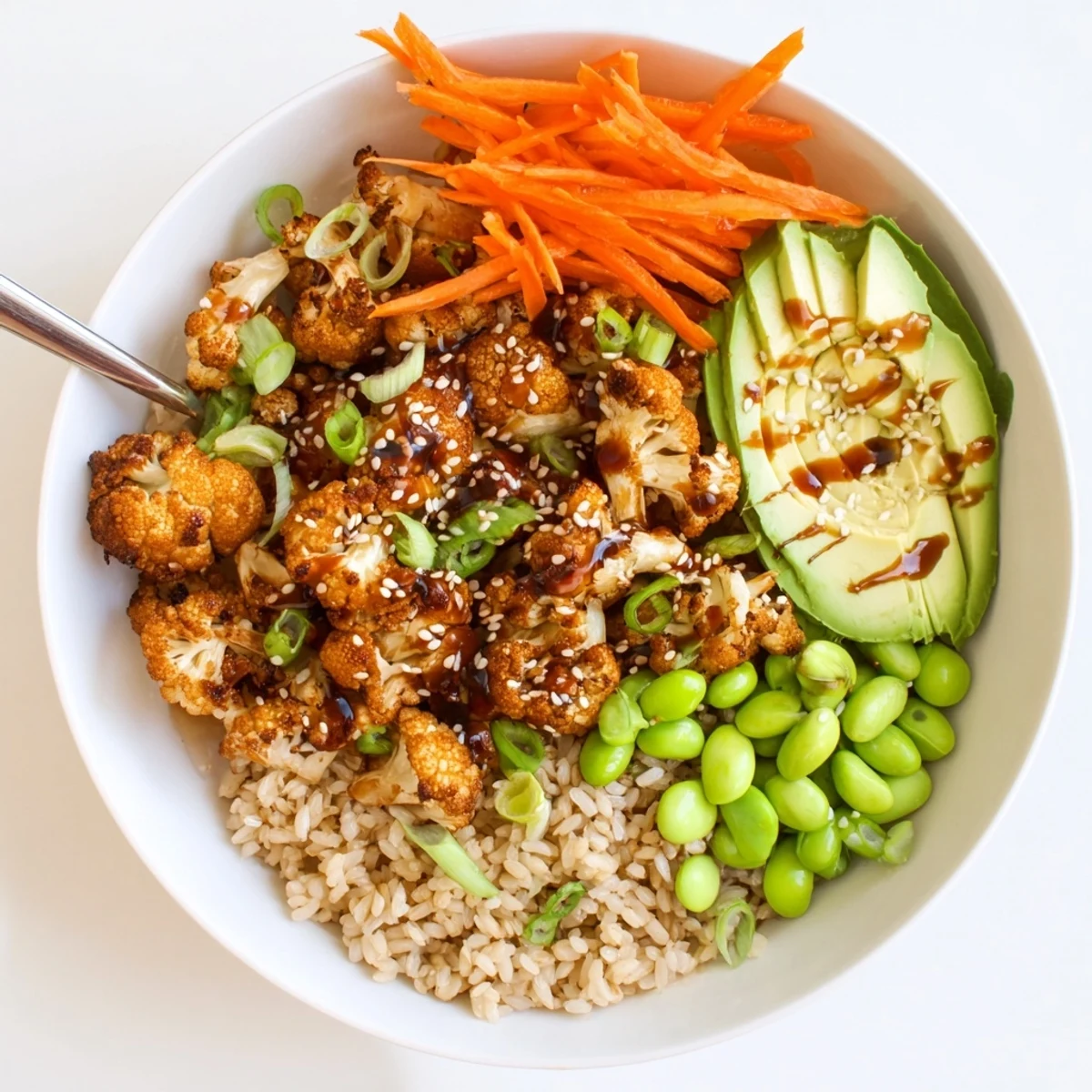
- Divide the rice among four bowls and arrange the teriyaki cauliflower alongside the julienned carrot, cucumber slices, edamame, and avocado. Finish with a scatter of green onions and sesame seeds and serve right away while the cauliflower is still warm.
 Pin It
 The first time I got the sauce thickness right I actually stood at the stove dipping a spoon in repeatedly just to taste it. It was one of those small kitchen victories that made me feel like I had cracked a code I had been fumbling with for months.
When Your Sauce Is Not Cooperating
If your teriyaki sauce turns out too thin, let it simmer another minute and it will tighten up. If it goes too thick, a splash of water stirred in gently will bring it back to a drapey consistency that coats instead of clumping.
Making This Work For Everyone At The Table
Swap the rice for quinoa or even extra cauliflower rice if someone is watching carbs and it still tastes complete. The bowl is forgiving enough that you can add steamed broccoli, shredded red cabbage, or even crispy tofu without throwing off the balance.
Storage and Reheating Without Sadness
Keep the cauliflower and rice separate from the fresh toppings if you plan to eat it the next day. Reheat the cauliflower in a skillet or oven rather than the microwave to bring back some of the crispy edges you worked hard to get.
- Store the teriyaki cauliflower in an airtight container in the fridge for up to three days.
- Keep avocado slices in a separate container with a squeeze of lemon juice to slow browning.
- Assemble fresh bowls right before eating for the best texture contrast.
 Pin It
 This bowl is proof that a handful of humble ingredients treated with a little care can easily outshine something far more complicated. Make it once and you will find yourself reaching for cauliflower at the store without even thinking about it.
Recipe Questions
- → How do I thicken the teriyaki sauce without lumps?
-
Whisk cornstarch with cold water to form a smooth slurry before adding it to the simmering sauce. Pour slowly while whisking and cook 1–2 minutes until glossy and thickened.
- → Can I make this gluten-free?
-
Yes—use tamari or a certified gluten‑free soy sauce in the teriyaki and verify that any other packaged ingredients are labeled gluten‑free. The bowls remain naturally gluten‑free with these swaps.
- → What yields the best crispy cauliflower?
-
Dry the florets thoroughly, coat with a bit of oil, spread them in a single layer on a hot baking sheet, and roast at 220°C (425°F) without crowding. Turn once for even browning.
- → How should I store and reheat leftovers?
-
Store components in an airtight container in the fridge for 3–4 days. Reheat the cauliflower in a hot oven or skillet to restore crispness; warm the sauce and rice separately before assembling.
- → What are easy swaps for rice?
-
Substitute cooked quinoa, farro, or cauliflower rice for different textures and carb levels. Quinoa adds nuttiness and pairs well with the teriyaki glaze.
- → How can I add heat or extra flavor?
-
Drizzle sriracha, chili oil, or sprinkle red pepper flakes when assembling. Toasted sesame oil or a squeeze of lime brightens the bowl without altering core flavors.