
 Pin It
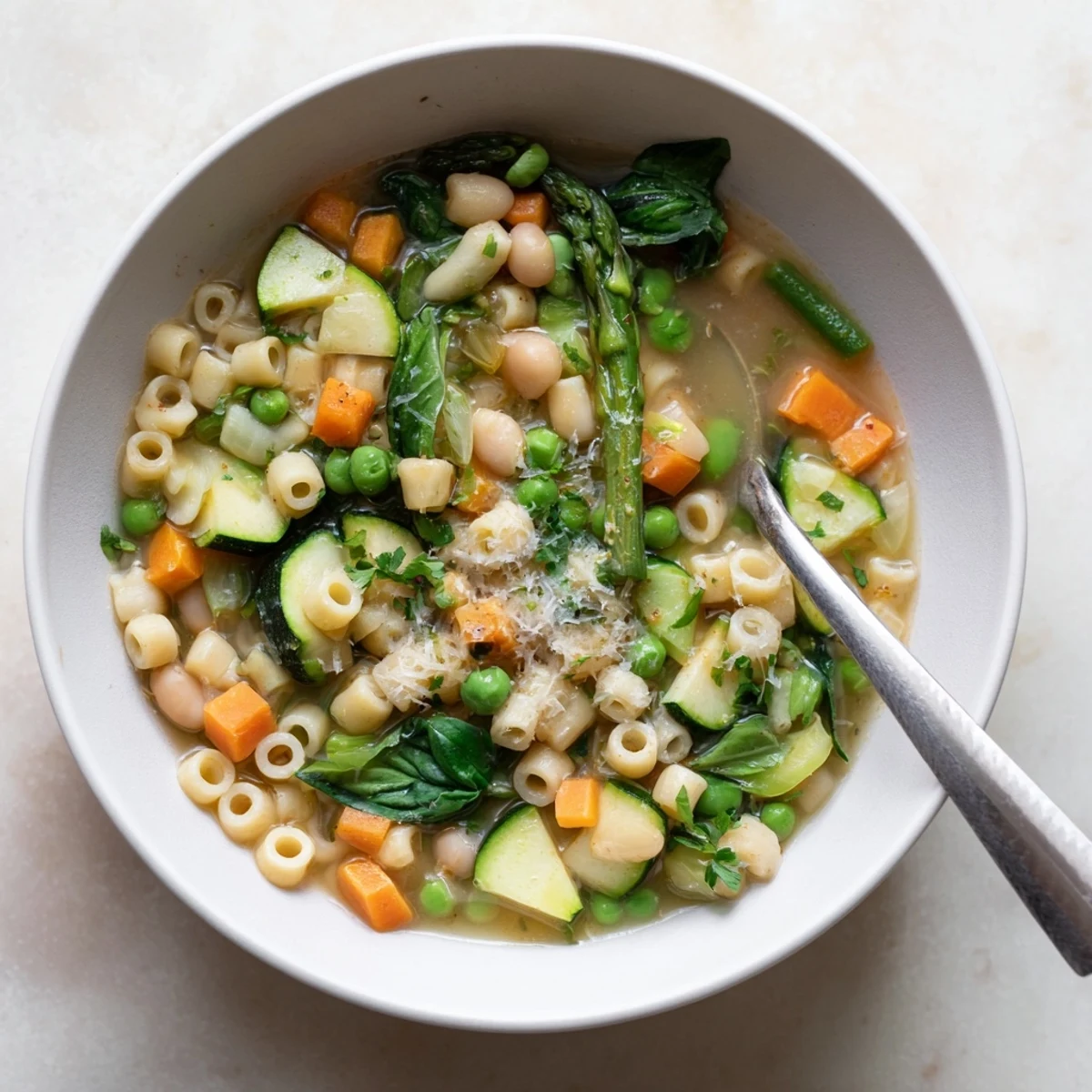
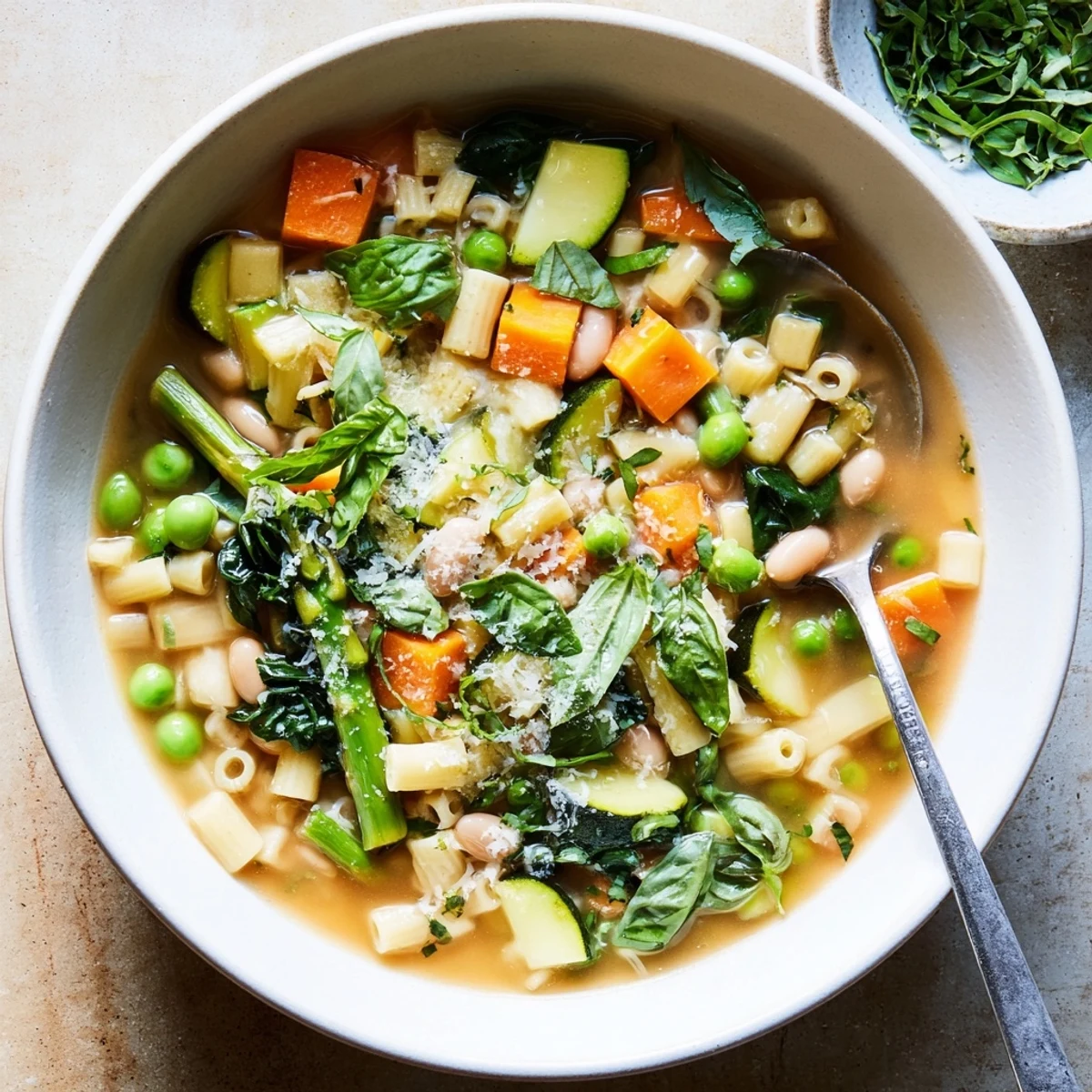
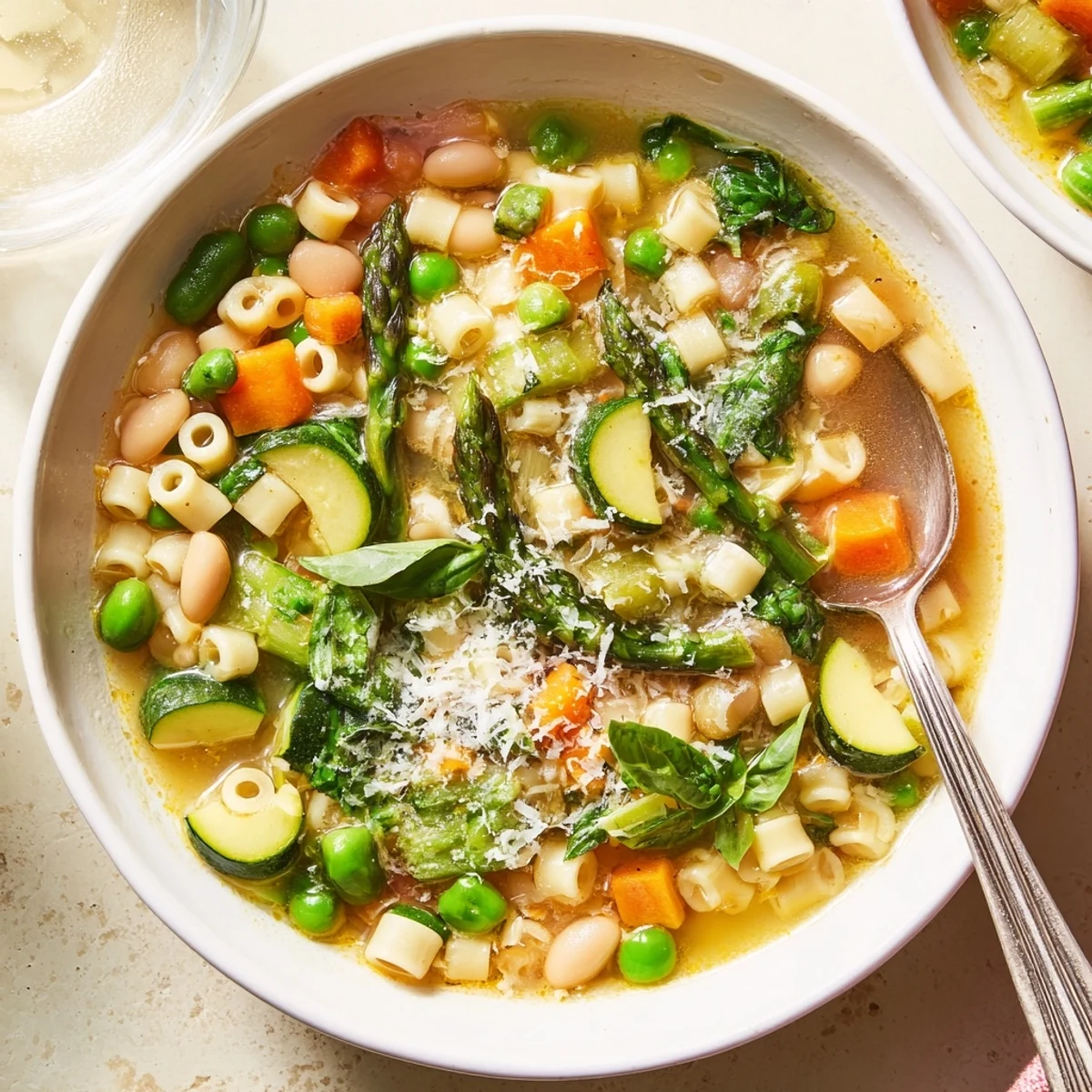
 This spring minestrone brings together asparagus, zucchini, peas, and baby spinach in a savory vegetable broth with cannellini beans and small pasta. Fresh basil, parsley, and a splash of lemon juice brighten every bowl. It comes together in about 45 minutes with minimal prep, making it an ideal weeknight meal that feels nourishing without being heavy.
The farmer's market that April was so crowded I could barely move, but I left with a canvas bag full of asparagus and peas so fresh they still had their dew on them. That bag turned into this soup, and I have not looked at spring any other way since.
My neighbor Joanne came over while I was making this and stood in the kitchen doorway just breathing in the smell of garlic and basil hitting hot olive oil. She asked for the recipe before she even tasted it.
Ingredients
- Olive oil: Use the good stuff here because it is the base flavor of the whole soup and cheap oil will show
- Onion and garlic: Take the time to get the onion truly translucent before adding garlic so everything builds in the right order
- Carrots: Keep the dice small so they soften at the same rate as the delicate vegetables
- Asparagus: Trim the woody ends and cut into short pieces that fit nicely on a spoon
- Zucchini: Do not skip this because it adds a subtle sweetness that balances the broth beautifully
- Peas: Fresh peas are worth seeking out but frozen work just fine if you are in a pinch
- Baby spinach: Added at the very end so it stays vibrant and does not turn muddy
- Vegetable broth: A quality broth makes or breaks this so taste it first and make sure you actually like it on its own
- Cannellini beans: These make the soup substantial enough to serve as a meal without any meat
- Small pasta: Ditalini is my go to but orzo works if that is what you have in the pantry
- Salt and pepper: Season in layers rather than all at once for a more rounded flavor
- Fresh basil and parsley: Dried herbs would be a mistake here because the fresh ones are what make it sing
- Lemon juice: This final squeeze wakes up every other ingredient on the plate
- Parmigiano Reggiano: Even a small amount grated over the top turns a good soup into something you will crave
Instructions
- Build the base:
- Heat olive oil in a large pot over medium heat and cook the onion for about three minutes until it goes soft and glassy. You want it sweet and yielding, not browned at all.
- Add the aromatics:
- Toss in the garlic and carrots and let them cook for two to three minutes until the kitchen starts smelling incredible. Stir frequently so the garlic does not catch.
- Bring in the green vegetables:
- Stir in the asparagus, zucchini, and peas and cook for two more minutes, moving them around gently. They do not need to be fully cooked yet.
- Simmer with broth and beans:
- Pour in the vegetable broth and bring everything to a rolling boil. Add the cannellini beans and pasta, then drop the heat, cover the pot, and let it simmer for eight to ten minutes until the pasta is tender.
- Finish with herbs and greens:
- Stir in the spinach, basil, and parsley and cook just one or two minutes until the spinach collapses into bright green ribbons. Do not overcook this part.
- Season and serve:
- Remove the pot from heat, squeeze in the lemon juice, and add salt and pepper until it tastes right to you. Ladle into bowls and finish with Parmigiano Reggiano if you are using it.
 Pin It
 I made a double batch of this for a rainy Sunday lunch and my usually picky eight year old had three bowls. There was no bread left afterward either.
Picking the Right Vegetables
Walk through the market and let what looks best decide what goes in the pot. Fava beans, green beans, or even tender leeks can replace or join the asparagus and zucchini without changing the character of the soup at all.
What to Serve Alongside
A crusty loaf torn into pieces and dipped straight into the broth is non negotiable in my house. A cold glass of Pinot Grigio turns the whole meal into something that feels like a small vacation.
Making It Your Own
Swap the pasta for a gluten free variety or skip it entirely and add an extra half can of beans for a heartier texture. The soup is forgiving enough to handle all kinds of changes without falling apart.
- Try a pinch of red pepper flakes in the oil for gentle warmth
- A dollop of pesto on top instead of Parmesan is a revelation
- Leftovers taste even better the next day once the flavors settle
 Pin It
 This is the soup that makes me believe spring is actually here. I hope it does the same for you.
Recipe Questions
- → Can I make this minestrone ahead of time?
-
Yes, the soup stores well in the refrigerator for up to 3 days. The pasta may absorb some broth, so add a splash of vegetable broth when reheating.
- → What pasta works best in spring minestrone?
-
Small shapes like ditalini, orzo, or tubettini blend nicely. Use gluten-free pasta if needed to accommodate dietary restrictions.
- → How do I make this soup vegan?
-
Simply skip the Parmigiano Reggiano garnish or replace it with a plant-based cheese alternative. All other ingredients are naturally vegan.
- → Can I swap in different spring vegetables?
-
Absolutely. Fava beans, green beans, leeks, or even diced fennel work beautifully in place of or alongside the suggested vegetables.
- → What pairs well with this soup?
-
Crusty bread for dipping and a crisp white wine like Pinot Grigio complement the light, herbaceous flavors perfectly.
- → Is this suitable for freezing?
-
You can freeze it for up to 2 months, though the pasta texture may soften slightly. Consider cooking pasta separately and adding it when reheating for the best result.