
 Pin It
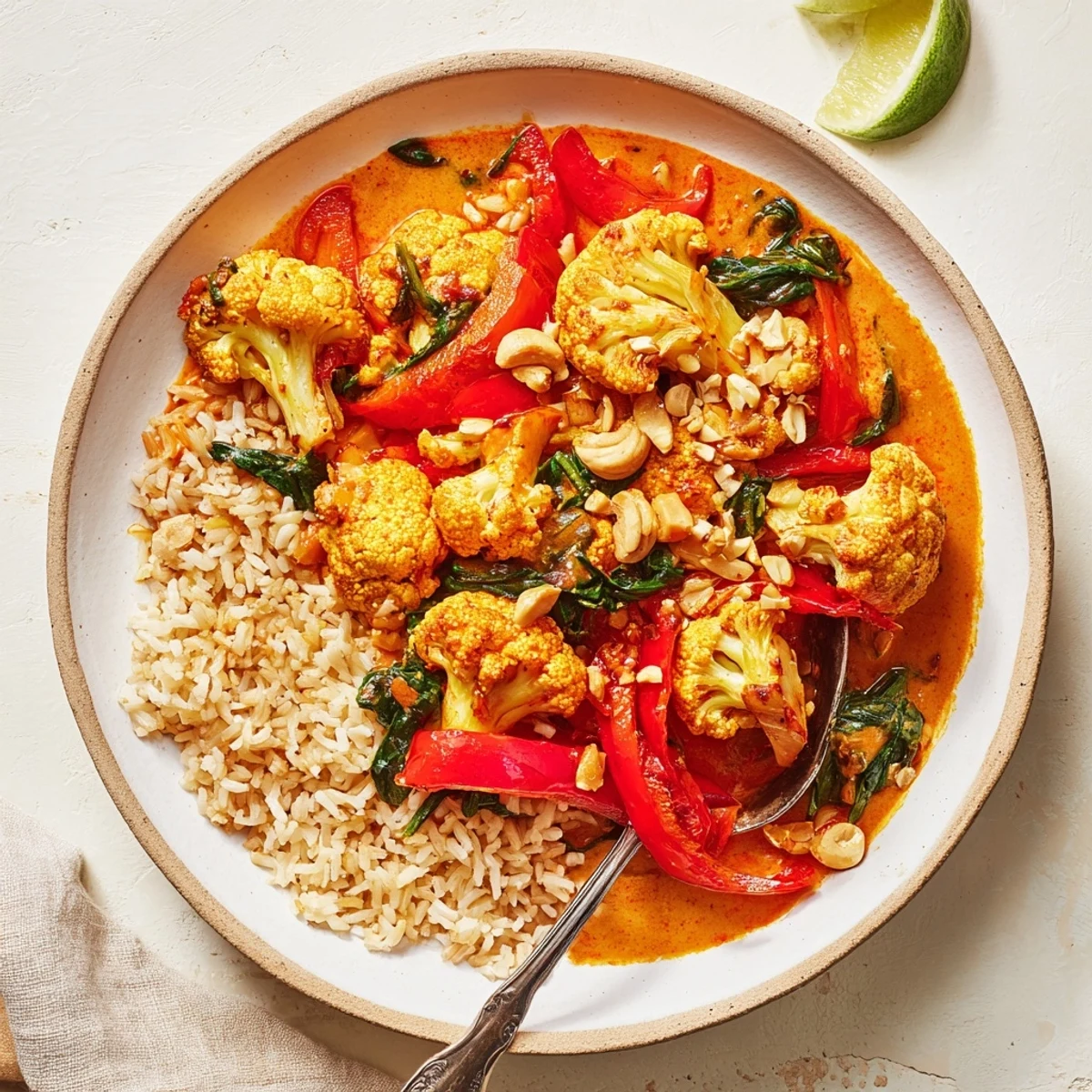
 This dish layers caramelized roasted cauliflower and red bell pepper with a silky coconut-red curry sauce, served over fluffy jasmine or basmati rice. Roast the vegetables until browned, simmer the curry paste with coconut milk and turmeric, then fold in the roasted veg and wilted spinach. Brighten with lime juice, fresh cilantro, and toasted cashews for crunch before serving warm.
The smell of turmeric hitting a hot oven pan is one of those small kitchen miracles that makes you stop and breathe deeper before you even realize you are doing it. I threw this dish together one rainy Tuesday when the fridge offered nothing but a lonely head of cauliflower and half a jar of red curry paste. What came out of the oven turned a dreary evening into something worth remembering. Now it shows up on my table at least twice a month, rain or shine.
My neighbor Karen knocked on my door the first time I made this, claiming she could smell something amazing from the hallway. We ended up splitting the entire batch right there standing in my kitchen, forks in hand, no plates needed. She now texts me every Sunday asking if the curry cauliflower is happening again.
Ingredients
- 1 medium head cauliflower, cut into florets: The star of the dish, so pick one that feels heavy for its size with tight, creamy white florets and no brown spots.
- 1 large red bell pepper, sliced: Adds a sweet contrast and gorgeous color that makes the whole dish look like a sunset on a plate.
- 1 small onion, finely chopped: Yellow or red both work beautifully here, just make sure you cook it down until it turns translucent and sweet.
- 2 cloves garlic, minced: Fresh garlic only for this one, the jarred stuff simply cannot compete with the aroma that fills your kitchen.
- 1 inch piece fresh ginger, grated: Peel it with a spoon edge, a trick a friend taught me that saves so much fuss compared to a peeler.
- 2 cups baby spinach (optional): Tossed in at the last second for a pop of green that wilts down into the sauce like it was always meant to be there.
- 1 cup jasmine or basmati rice, rinsed: Rinsing is nonnegotiable if you want those separate, fluffy grains rather than a gummy clump.
- 2 cups water: Plain water works, but if you have leftover vegetable broth it adds a lovely depth.
- 1/2 tsp salt: For the rice water, and you will want more on hand for seasoning the vegetables before roasting.
- 2 tbsp red curry paste: Start with two tablespoons and taste before adding more, because heat levels vary wildly between brands.
- 1 can (400 ml) coconut milk: Full fat is the way to go for that rich, velvety sauce that clings to every floret.
- 1 tbsp soy sauce or tamari: Tamari keeps it gluten free and actually has a rounder, deeper flavor I now prefer.
- 1 tsp ground turmeric: This is what gives everything that warm golden hue and an earthy backbone that ties the whole dish together.
- 2 tbsp olive oil: Split between roasting the vegetables and sautéing the aromatics, so every stage gets its own slick of flavor.
- Juice of 1 lime: Squeezed in at the very end to wake everything up with a bright, tangy finish.
- Fresh cilantro, lime wedges, and toasted cashews or peanuts: The garnishes are not optional in my house because that crunch and freshness take each bite from good to unforgettable.
Instructions
- Get the oven roaring:
- Preheat your oven to 220 degrees C (425 degrees F) and line a baking sheet with parchment paper so nothing sticks and cleanup is a dream.
- Roast until gorgeous:
- Toss the cauliflower florets and sliced bell pepper with one tablespoon olive oil, a generous pinch of salt, and the ground turmeric until everything is well coated. Spread them in a single layer on the baking sheet and roast for 25 to 30 minutes, flipping halfway through, until you see those beautiful caramelized brown edges forming.
- Get the rice going:
- While the vegetables roast, combine the rinsed rice, water, and half a teaspoon of salt in a saucepan and bring it to a boil. Reduce the heat to low, cover tightly, and let it simmer for 12 to 15 minutes until the water is absorbed and the grains are tender. Fluff with a fork and set aside.
- Build the curry base:
- In a large skillet or wok, heat the remaining tablespoon of olive oil over medium heat and add the chopped onion, minced garlic, and grated ginger. Sauté for 2 to 3 minutes until your kitchen smells incredible and the onions turn soft and translucent.
- Make the sauce sing:
- Stir in the red curry paste and let it cook for about a minute until it darkens slightly and becomes incredibly fragrant. Pour in the coconut milk and soy sauce, stirring to combine everything into a smooth, golden sauce, then let it simmer for 3 to 4 minutes until it thickens enough to coat the back of a spoon.
- Bring it all together:
- Add the roasted cauliflower and bell pepper to the curry sauce, tossing gently so every piece gets coated. If you are using baby spinach, fold it in now and watch it wilt down into the sauce in seconds, then squeeze in the lime juice and give everything one final stir.
- Plate and garnish:
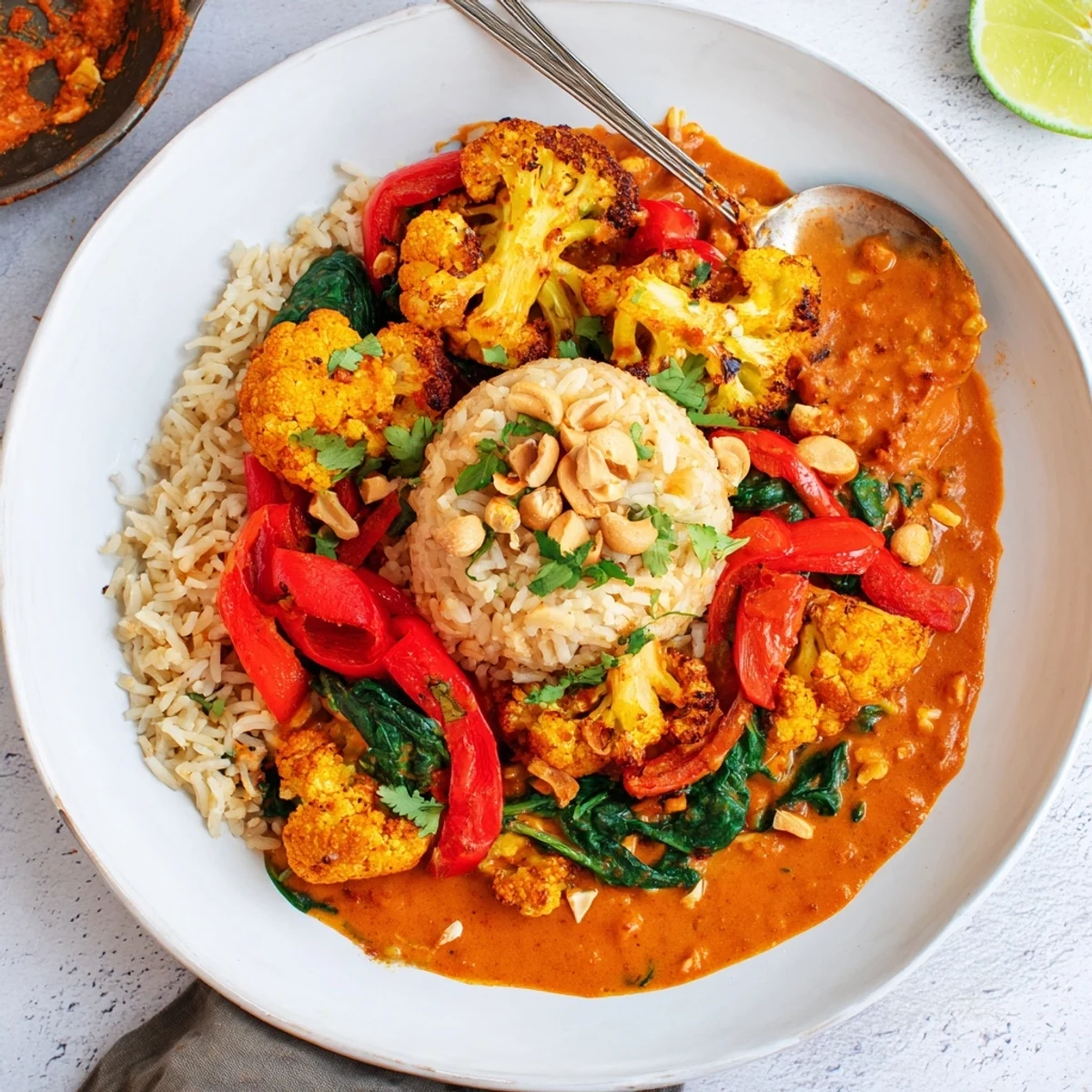
- Spoon the curry generously over bowls of fluffy rice and top with fresh cilantro, lime wedges, and a handful of toasted cashews or peanuts for that essential crunch.
 Pin It
 The night I served this to my sister who claims she hates cauliflower, she went back for seconds before I even sat down to eat. That moment taught me that the right spices and a hot oven can change anyones mind about almost any vegetable.
Making It Your Own
This recipe is wonderfully forgiving and loves improvisation. Toss in a handful of frozen peas, diced carrots, or even chickpeas during the curry simmer stage and everything plays along beautifully. Grilled tofu cubes also turn this into a protein packed meal that could easily feed a hungry crowd on a weeknight.
What To Drink With It
A crisp Sauvignon Blanc cuts right through the richness of the coconut milk and refreshes your palate between bites. If beer is more your speed, a light lager does the same job without competing with the curry spices. Either way, serve it cold, because the contrast between a cold drink and a steaming bowl of curry is genuinely one of lifes simple pleasures.
Storing And Reheating Leftovers
Leftovers keep beautifully in an airtight container in the refrigerator for up to three days, and honestly the flavors deepen overnight in a way that makes the second day even better. Store the rice and curry separately if you can, because the rice will absorb all the sauce if left together and turn into something closer to a thick stew. When reheating, a gentle warm up on the stove with a splash of water brings the sauce back to life perfectly.
- Freeze the curry portion on its own for up to one month, then make fresh rice when you are ready to serve.
- A quick squeeze of fresh lime juice after reheating wakes up all the flavors that may have gone to sleep in the fridge.
- Always taste for salt before serving leftovers, because rice has a sneaky way of absorbing seasoning overnight.
 Pin It
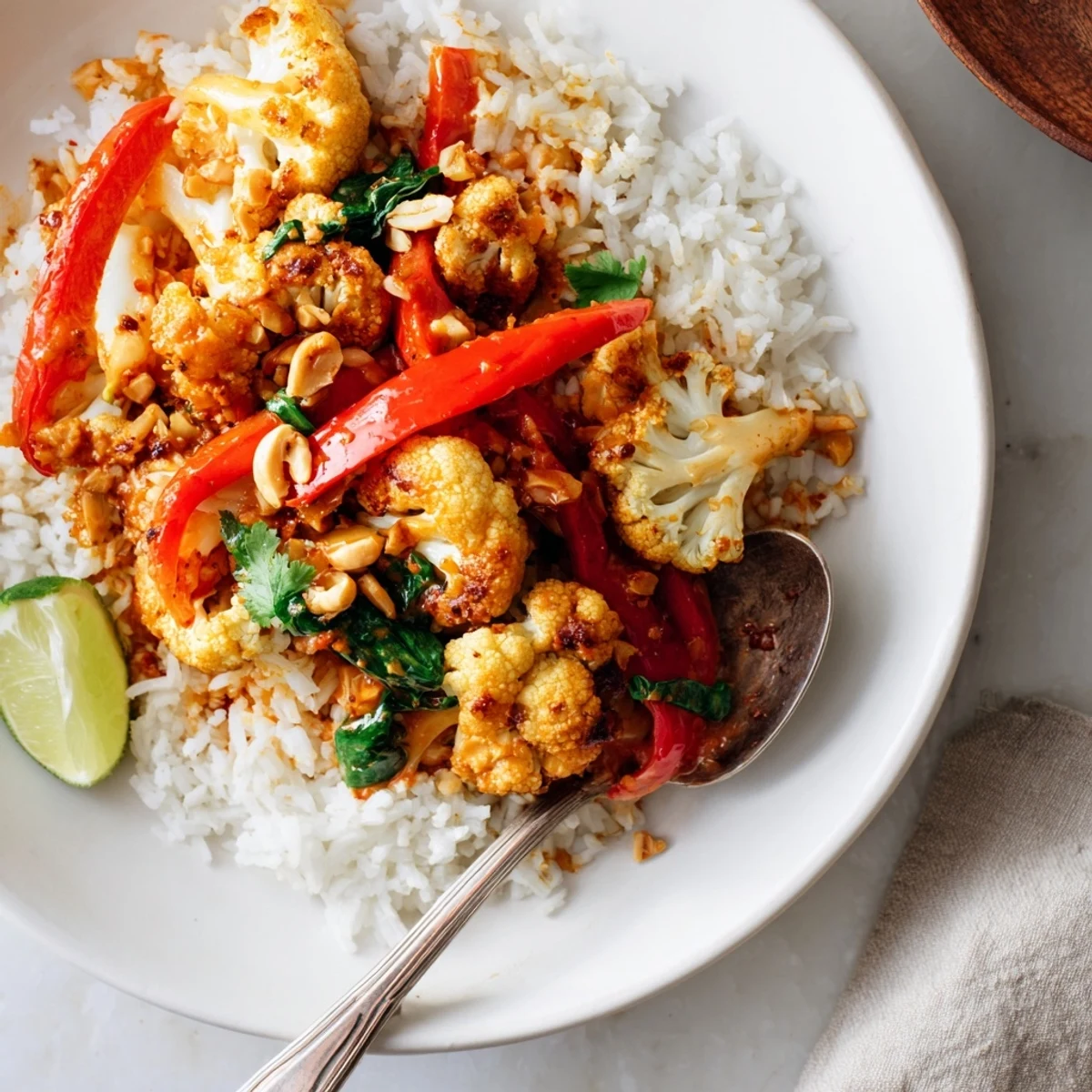
 Some dishes feed you and some dishes remind you why cooking is worth the effort, and this one somehow manages to do both at once. Make it once and I suspect it will quietly become part of your regular rotation too.
Recipe Questions
- → What temperature and time for roasting cauliflower?
-
Roast at 220°C (425°F) for 25–30 minutes, turning halfway, until florets are browned and tender; high heat encourages caramelization without sogginess.
- → Which rice works best with the curry?
-
Jasmine or basmati rice both pair well; rinse and simmer 1 cup rice with 2 cups water, covered, for 12–15 minutes then fluff to keep grains light under the sauce.
- → How can I adjust the spice level?
-
Control heat by adding more or less red curry paste. Start with 1–2 tablespoons, then taste the sauce and increase if you want more kick; a squeeze of lime also balances heat.
- → How to make this nut-free and allergy friendly?
-
Omit toasted cashews or peanuts and double-check curry paste and soy sauce labels. Use tamari for a gluten-free option; add seeds like toasted pumpkin for crunch if desired.
- → Can I prepare components ahead of time?
-
Yes. Roast the cauliflower and cook rice up to a day ahead. Reheat the curry sauce gently, then toss in roasted veg to warm through just before serving to retain texture.
- → What proteins or extras pair well with this dish?
-
Stir in chickpeas or grilled tofu for more heft, or add peas and sliced carrots for extra vegetables. A light herb garnish and extra lime wedges brighten the final plate.